Best Places to Buy a 2.5 Carat Diamond Online (2026 Guide)
A 2.5 carat diamond offers serious presence without entering the pricing territory of a full 3 carat stone. It is large enough to become the unmistakable focal point of an engagement ring, but still practical enough for everyday wear when paired with the right setting.
However, buying a diamond of this size requires careful research. Differences in cut quality, color, clarity and proportions become far more noticeable as carat weight increases. A poorly cut 2.5 carat diamond can look dull, dark or smaller than expected, while a beautifully cut stone can appear brighter and more impressive than a heavier diamond with weaker proportions.
For buyers still comparing sizes, it may help to review our guides to 2 carat diamonds and 3 carat diamonds. You can also learn more about how weight affects appearance in our complete diamond carat guide.
After comparing diamond quality, selection, imaging, pricing and customer support, these are the best places to buy a 2.5 carat diamond online in 2026.
The Best Places to Buy a 2.5 Carat Diamond Online
| Rank | Retailer | Best For | Natural and Lab-Grown |
|---|---|---|---|
| 1 | Whiteflash | Exceptional cut quality and verified light performance | Both |
| 2 | Blue Nile | Large selection and flexible budgets | Both |
| 3 | Brilliant Earth | Lab-grown diamonds and responsible sourcing options | Both |
| 4 | Ritani | Comparing prices across a varied marketplace inventory | Both |
| 5 | Diamonds by Lauren | Fancy colors and custom-made rings | Both |
1. Whiteflash
Best for Cut Quality and Light Performance
Whiteflash is my first choice for anyone looking for an exceptionally beautiful 2.5 carat diamond.
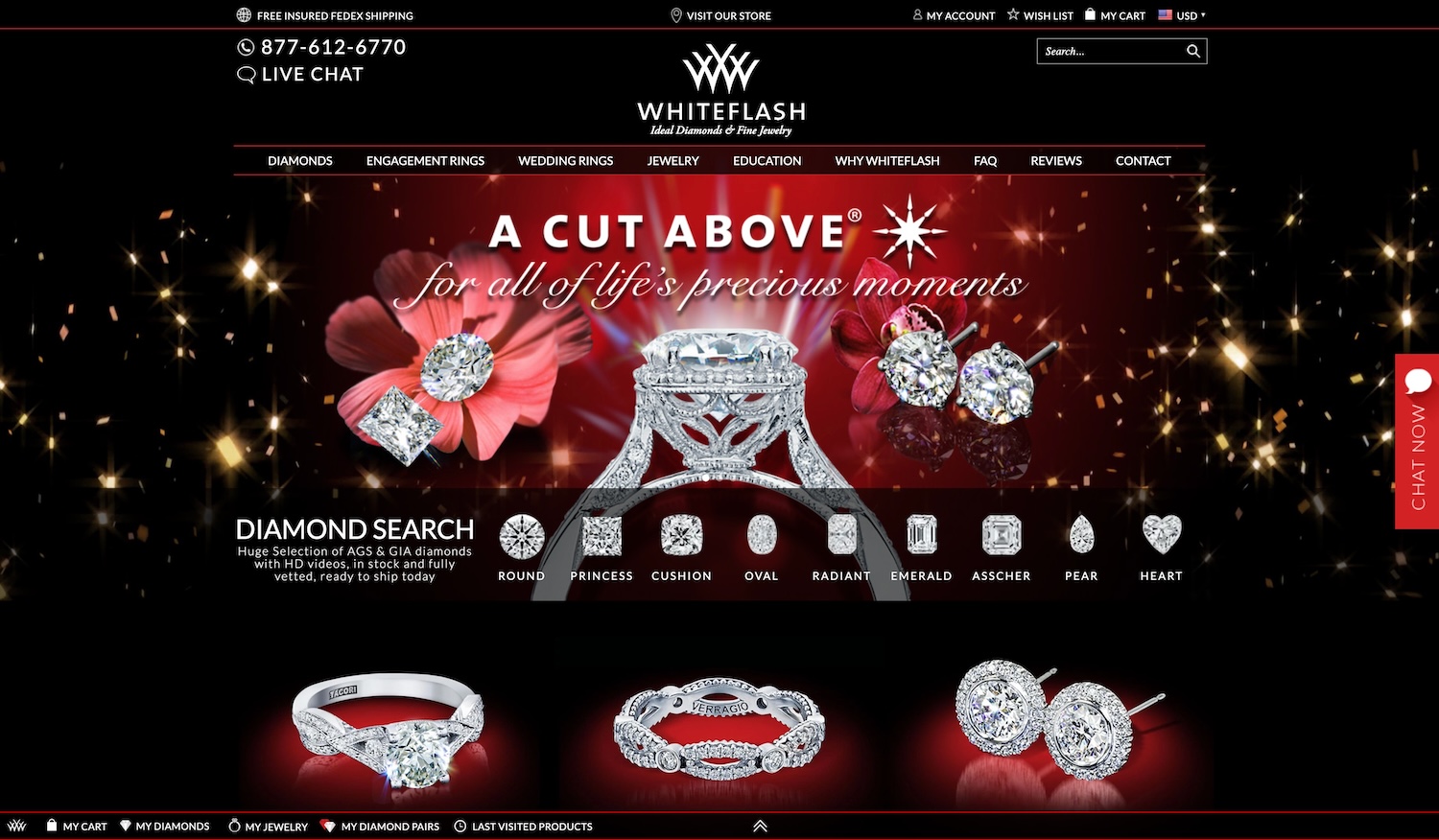
At this size, cut quality matters more than ever. A 2.5 carat diamond represents a substantial financial purchase, so relying solely on the information shown on a grading report is not enough. Two diamonds with the same carat weight, color, clarity and laboratory cut grade can still display very different levels of brightness, fire and contrast.
Whiteflash is particularly strong because its in-house diamonds are supported by extensive diagnostic information. Depending on the collection, this can include:
- High-definition videos
- ASET images
- IdealScope images
- Hearts and Arrows photography
- Detailed proportion information
- Independent grading reports
- Physical inspection by the Whiteflash gemological team
Its flagship A CUT ABOVE® collection contains precision-cut natural diamonds that must pass strict requirements for proportions, craftsmanship, optical symmetry and light performance. Each in-house diamond can therefore be assessed using actual performance evidence rather than marketing terminology alone.
This is particularly valuable when buying a larger diamond. Strong edge-to-edge light return can help a well-cut stone look bright and visually substantial, while light leakage can make a poorly cut diamond look smaller or lifeless.
Whiteflash is strongest for round brilliant diamonds, although its A CUT ABOVE® collection also includes princess cuts. Buyers considering other shapes can explore its Expert Selection, Premium Select and Precision Lab inventories.
The company also offers a lifetime trade-up program on eligible in-house diamonds, which may be valuable if you eventually decide to move from 2.5 carats to a larger stone. Review the current eligibility and upgrade requirements before purchasing.
You can read our complete Whiteflash review and our detailed review of A CUT ABOVE® diamonds for more information.
Whiteflash strengths
- Exceptional focus on cut quality
- In-house and pre-vetted diamond collections
- Comprehensive light-performance imaging
- Strong natural and lab-grown options
- Experienced diamond consultants
- High-quality designer and custom settings
- Lifetime trade-up benefits on eligible diamonds
Potential drawback
Whiteflash has a smaller inventory than large virtual marketplace retailers. Its best diamonds may also carry a premium over ordinary GIA Excellent diamonds, although that premium reflects the additional cutting precision, imaging and quality control.
Best buyer match
Whiteflash is the strongest choice for someone who wants a 2.5 carat diamond with proven optical performance and does not want to rely on a grading report alone.
Shop 2.5 carat diamonds at Whiteflash
2. Blue Nile
Best for Selection and Flexible Budgets
Blue Nile is one of the best places to compare a large number of 2.5 carat diamonds across different shapes, grades and price points.

Its diamond search system allows buyers to filter by characteristics including:
- Carat weight
- Shape
- Cut grade
- Color
- Clarity
- Price
- Fluorescence
- Grading laboratory
- Length-to-width ratio
This makes Blue Nile particularly useful if you have a specific combination in mind, such as a 2.50 carat G color VS2 oval or a 2.60 carat H color VS1 emerald cut.
Blue Nile offers natural and lab-grown diamonds, along with round, oval, cushion, pear, emerald, radiant, princess, Asscher and marquise shapes. Its large inventory can make it easier to compare diamonds slightly above and below the 2.5 carat mark.
For example, consider searching between approximately 2.40 and 2.70 carats rather than limiting yourself to exactly 2.50 carats. A 2.43 carat diamond may look virtually identical once set but cost less, while a 2.60 carat diamond with excellent proportions could offer a noticeably better spread.
Many Blue Nile diamonds include magnified imagery or video, but the amount and consistency of information can vary. Unlike Whiteflash, Blue Nile does not generally provide ASET, IdealScope and Hearts and Arrows images for every diamond. Buyers therefore need to examine the proportions, grading report and video carefully.
Our guide to diamond videos and imaging explains what to look for when comparing diamonds online.
Blue Nile also offers its Astor collection for buyers seeking a more selective diamond category, although these diamonds should still be judged individually rather than selected purely because of the collection name. Its online Diamond Finder currently supports both standard Excellent and Astor filters.
Read our full Blue Nile review for a closer look at its diamonds, pricing and shopping experience.
Blue Nile strengths
- Extensive diamond inventory
- Excellent selection of fancy shapes
- Natural and lab-grown diamonds
- Useful filtering and comparison tools
- Wide range of settings and budgets
- Established online purchasing process
Potential drawback
The quality of virtual inventory can vary significantly. Buyers need to separate strong diamonds from average examples by studying the certificate, proportions and video.
Best buyer match
Blue Nile is ideal for shoppers who want the widest possible selection and are comfortable comparing several diamonds before making a decision.
Compare 2.5 carat diamonds at Blue Nile
3. Brilliant Earth
Best for Lab-Grown Diamonds and Responsible Sourcing Options
Brilliant Earth is a popular destination for buyers interested in lab-grown diamonds, recycled precious metals and more traceable sourcing options.
The retailer offers a wide selection of natural and lab-grown diamonds, including larger stones around the 2.5 carat mark. It also provides numerous engagement ring settings with modern, vintage-inspired and nature-influenced designs.
Brilliant Earth has developed several distinct lab-grown collections, including diamonds produced using renewable energy and diamonds associated with captured carbon technology. It also offers recycled diamonds and jewelry made using repurposed precious metals.
This makes it a particularly relevant option for someone who wants a large lab-grown diamond but also wants to explore the production history and materials used in the finished ring.
Lab-grown diamonds have the same fundamental physical, chemical and optical properties as natural diamonds, but their prices are generally much lower. The difference is their origin, scarcity and likely long-term resale behavior.
Before deciding, read our lab-grown diamond guide to understand the differences between natural and laboratory-grown stones.
Brilliant Earth provides videos for many diamonds, but buyers should still evaluate each stone individually. A lab-grown diamond can receive high color and clarity grades while displaying unwanted tint, haziness, strain or weak cutting. Do not assume that every Ideal or Excellent diamond will provide equally good light performance.
Our complete Brilliant Earth review examines its diamond quality, settings and sourcing claims in more detail.
Brilliant Earth strengths
- Large lab-grown diamond selection
- Natural, lab-grown and recycled diamond options
- Extensive collection of engagement ring settings
- Modern customization experience
- Repurposed precious metal options
- Physical showrooms in several locations
Potential drawback
Pricing can be higher than some marketplace competitors, particularly once a premium setting is added. Diamond imaging and cut transparency are also less comprehensive than Whiteflash’s in-house collections.
Best buyer match
Brilliant Earth is best suited to someone seeking a 2.5 carat lab-grown diamond, a modern setting and a wider range of sourcing or material options.
Shop 2.5 carat diamonds at Brilliant Earth
4. Ritani
Best for Comparing Individual Deals
Ritani is worth checking if price comparison is an important part of your search.
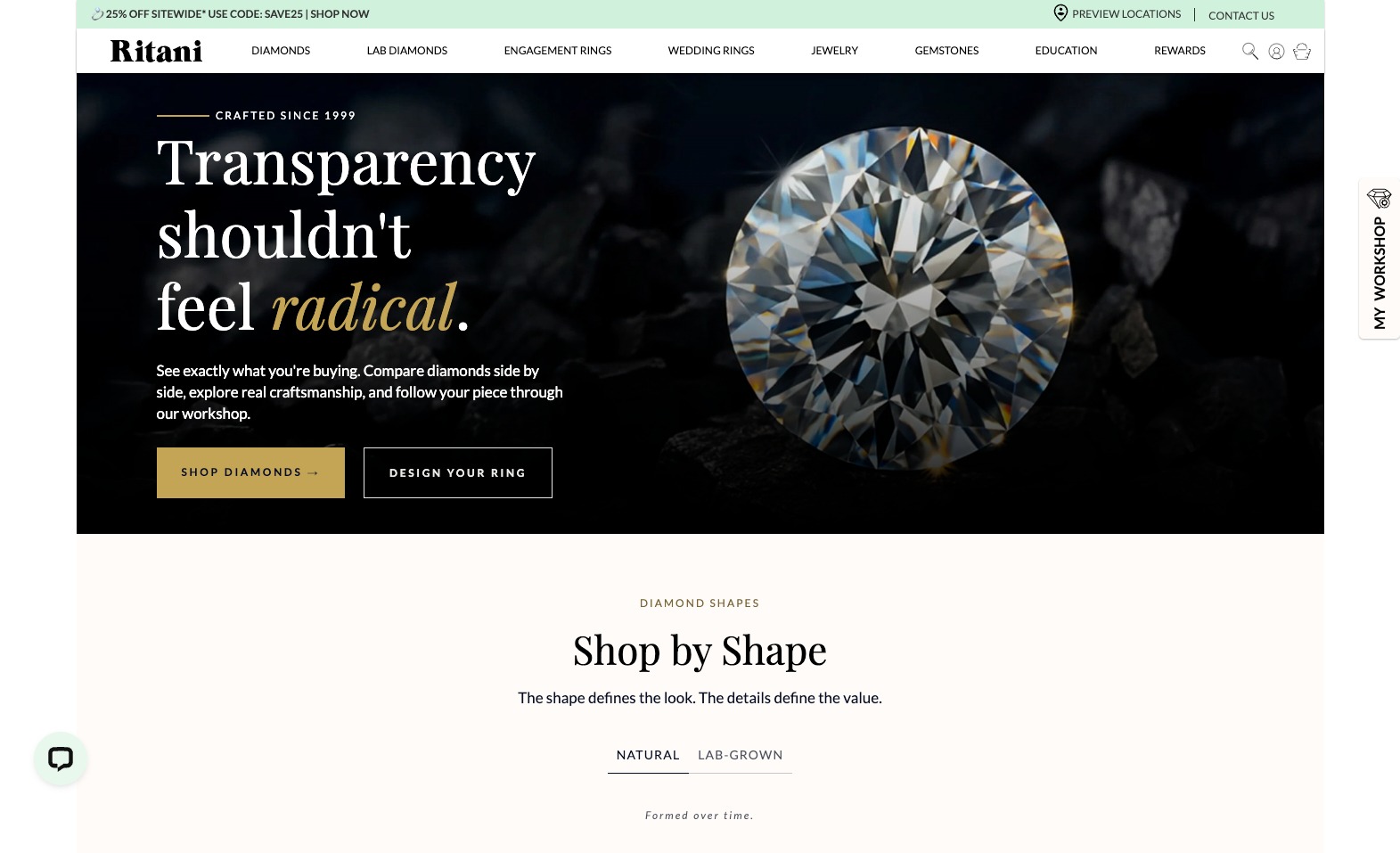
Its current 2.5 carat inventory includes natural and lab-grown diamonds across a range of shapes, colors and clarity grades. At the time of research, its natural inventory included examples below $10,000 in lower color and clarity combinations, although stronger near-colorless diamonds with higher clarity can cost considerably more.
Ritani can therefore be useful for identifying how shape, color and clarity affect pricing at this carat weight. However, the least expensive diamond is rarely the best value.
A low-priced 2.5 carat diamond may have:
- Noticeable warmth
- Visible inclusions
- Poor spread
- Weak light return
- An undesirable bow-tie
- An overly deep cut
- Limited or inconsistent imagery
Ritani’s images and diamond information are not always as comprehensive or consistent as those provided by the strongest specialist retailers. This means buyers should avoid purchasing based purely on the listed grading report or discount.
Our detailed Ritani review covers its current strengths and limitations.
Ritani strengths
- Natural and lab-grown inventory
- Broad range of prices
- Useful for market comparisons
- Multiple diamond shapes
- Occasional competitively priced stones
Potential drawback
Diamond imaging and cut-performance information can be inconsistent. Some diamonds may require additional analysis before they can be recommended confidently.
Best buyer match
Ritani is best for an experienced or research-focused shopper willing to compare individual diamonds and request additional information before purchasing.
Browse 2.5 carat diamonds at Ritani
5. Diamonds by Lauren
Best for Fancy Colors and Custom Designs
Diamonds by Lauren offers a very different experience from the larger retailers in this guide.
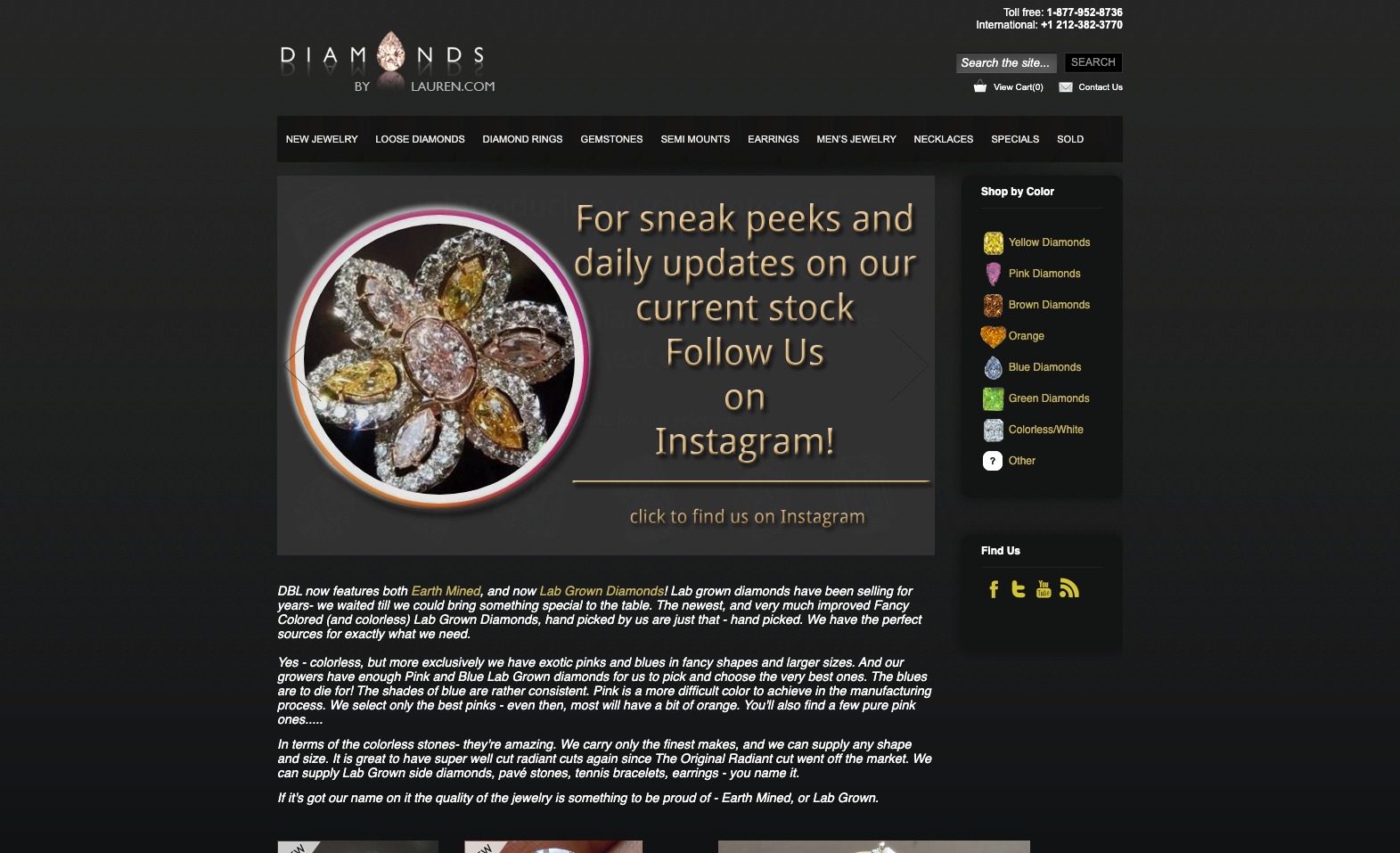
Rather than focusing primarily on enormous searchable inventories, Diamonds by Lauren specializes in individually selected diamonds, fancy colors and custom-made jewelry. It is particularly worth exploring if you want a 2.5 carat diamond that feels distinctive rather than conventional.
Its inventory regularly includes:
- Yellow diamonds
- Pink diamonds
- Brown and champagne diamonds
- Colorless and near-colorless diamonds
- Natural fancy-color diamonds
- Colored lab-grown diamonds
- Radiant, cushion, pear and emerald shapes
- Custom three-stone and halo rings
The company can create a setting around a specific diamond, including custom halos, side-stone combinations and mixed-metal designs. Its product pages also frequently display the individual diamond rather than relying on generic stock images.
Diamonds by Lauren is especially compelling for a 2.5 carat yellow radiant, elongated cushion or another unusual diamond that may not appear in a traditional colorless-diamond search.
Buyers considering fancy colors should remember that these diamonds are graded differently from diamonds on the standard D-to-Z color scale. Color strength, distribution and visual appeal can have a much greater impact on price than conventional colorless-diamond rules.
Diamonds by Lauren strengths
- Expertise in fancy-color diamonds
- Custom-made engagement rings
- Individually presented stones
- Unusual shapes and color combinations
- Personalized design process
- Natural and lab-grown options
Potential drawback
The inventory is smaller and less standardized than the inventories offered by Blue Nile or Ritani. This is a specialist destination rather than a mass-comparison platform.
Best buyer match
Diamonds by Lauren is best for someone seeking a unique 2.5 carat diamond, particularly a fancy-colored stone or a completely custom ring.
How Big Is a 2.5 Carat Diamond?
Carat is a measure of weight, not physical size. Two 2.5 carat diamonds can therefore have noticeably different dimensions.
A well-proportioned 2.5 carat round brilliant will typically measure around 8.7 to 9 millimeters across. An overly deep diamond may hide more weight underneath the setting and appear smaller from above.
Elongated shapes can create even more visual coverage. A 2.5 carat oval, pear, marquise or emerald cut may look larger than a round diamond of the same weight because the stone covers more of the finger.
However, a large outline does not automatically mean better quality. An oval with excessive spread may be shallow and display weak light return, while a poorly proportioned emerald cut may have distracting windowing.
Use the following Diamond Expert shape guides when comparing your options:
- Round cut diamonds
- Oval cut diamonds
- Cushion cut diamonds
- Radiant cut diamonds
- Princess cut diamonds
- Pear cut diamonds
- Asscher cut diamonds
How Much Does a 2.5 Carat Diamond Cost in 2026?
The price of a 2.5 carat diamond can vary by tens of thousands of dollars.
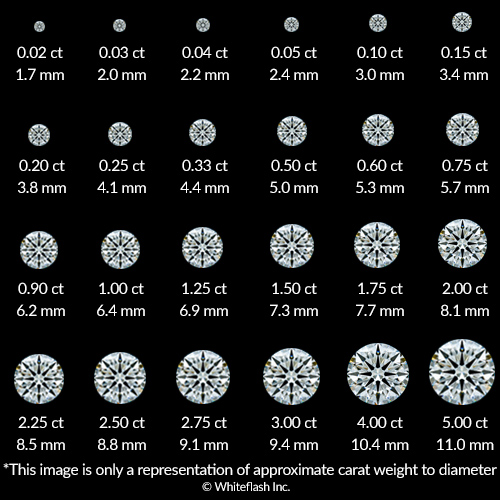
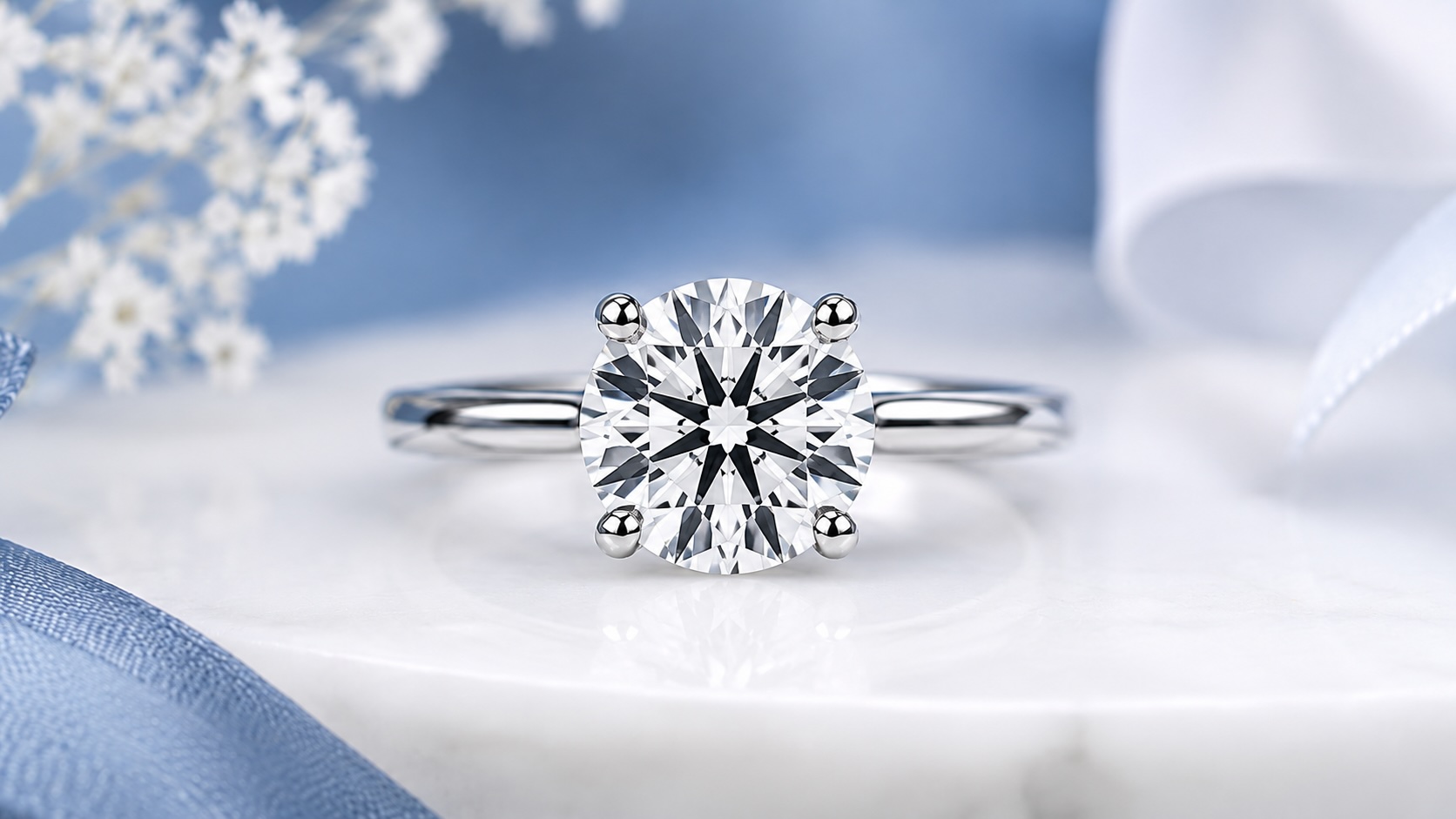
Image Courtesy Whiteflash
A high-quality natural round diamond in the near-colorless and eye-clean range may cost well into five figures. Current market listings place some 2.5 carat G color VS2 round diamonds above $30,000, while lower-color natural diamonds and certain fancy shapes may be available below $10,000.
Lab-grown diamonds generally cost a small fraction of the price of comparable natural diamonds. In 2026, many 2.5 carat lab-grown diamonds can be purchased for a few thousand dollars, although branded stones, premium cutting and designer settings can increase the finished price considerably. Lab-grown prices also continue to change rapidly, so current replacement value should not be confused with long-term retained value.
The final price will depend on:
- Natural or lab-grown origin
- Diamond shape
- Cut quality
- Color
- Clarity
- Certification
- Fluorescence
- Visual performance
- Brand or collection
- Setting and metal
- Upgrade and aftercare policies
Our diamond price guide explains how these factors interact.
Recommended Specifications for a 2.5 Carat Diamond
There is no single perfect combination of grades, but the following ranges provide a strong starting point.
Round Brilliant
- Cut: Ideal or Excellent, supported by strong proportions and imaging
- Color: G to H for value, F or higher for a premium colorless appearance
- Clarity: VS2 or an eye-clean SI1
- Certification: GIA, or IGI for many lab-grown diamonds
- Fluorescence: None to medium, judged individually
Round diamonds receive a laboratory cut grade, but there can still be meaningful differences between diamonds within the Excellent category. Read our complete guide to diamond cut before making a decision.
Oval, Pear, Cushion and Radiant
- Color: G to I, depending on shape and setting
- Clarity: VS2 or eye-clean SI1
- Polish and symmetry: Very Good or Excellent
- Certification: GIA or IGI
- Video: Essential
- Length-to-width ratio: Based on personal preference
- Bow-tie: Minimal or visually acceptable
The GIA does not provide an overall cut grade for most fancy shapes. High-resolution video, dimensions and visual analysis are therefore especially important.
Emerald and Asscher
- Color: G to H in white metal, potentially lower in yellow or rose gold
- Clarity: VS1 to VS2
- Polish and symmetry: Very Good or Excellent
- Certification: GIA or IGI
- Video: Essential for checking windowing and contrast
Step-cut diamonds have large, open facets that make inclusions easier to see. Choosing a slightly higher clarity grade can therefore be worthwhile.
Should You Buy VS2 or SI1 Clarity?
For many 2.5 carat diamonds, VS2 provides an excellent balance of appearance and value.
However, clarity must be judged visually. An inclusion near the edge may be easy to hide beneath a prong, while a dark inclusion underneath the table can remain distracting even with a higher overall grade.
Some SI1 diamonds are completely eye-clean, but this becomes less predictable as carat weight increases. Larger diamonds have larger facets, making inclusions easier to notice.
Read our guides to VS2 diamonds and SI1 diamonds before deciding how much clarity you need.
Avoid paying for microscopic perfection that cannot be appreciated without magnification. The goal should be an eye-clean, structurally sound diamond rather than the highest clarity grade available.
What Is the Best Color for a 2.5 Carat Diamond?
G and H are excellent starting points for many buyers.
A beautifully cut G color diamond will appear white in most settings while costing less than a comparable D, E or F diamond. This makes G one of the strongest value grades for a high-quality 2.5 carat stone.
Our G color diamond guide explains why it is often considered a sweet spot.
The best color also depends on the setting:
- Platinum or white gold may make color more noticeable.
- Yellow gold can complement slightly warmer diamonds.
- Rose gold may soften the appearance of near-colorless grades.
- Step cuts tend to reveal body color more readily.
- Round brilliants can hide moderate warmth through strong light return.
Review the full diamond color scale before paying a large premium for a colorless grade.
Natural or Lab-Grown?
Both natural and lab-grown diamonds can offer exceptional beauty.
Choose a natural diamond if you value geological rarity, traditional symbolism and potentially stronger long-term desirability.
Choose a lab-grown diamond if your priority is achieving a larger, higher-grade diamond for a substantially lower initial price.
A lab-grown 2.5 carat diamond may allow you to select higher color and clarity grades while keeping more of your budget available for the setting. However, declining lab-grown prices mean buyers should not expect the same resale or trade-in dynamics as natural diamonds.
Whichever origin you choose, insist on an independent grading report and clear disclosure. Our diamond certification guide explains the differences between GIA, IGI, GCAL and other grading organizations.
You should also learn how to read a diamond grading report rather than relying on the retailer’s headline description.
The Best Setting for a 2.5 Carat Diamond
A 2.5 carat center stone needs a secure and appropriately proportioned setting.
A four-prong solitaire provides an open view of the diamond, but a six-prong design can offer additional security for a valuable round stone. Bezel settings provide even greater protection and may suit someone with an active lifestyle.
Popular choices include:
Solitaire
A simple solitaire allows the size and quality of the diamond to take center stage. It is timeless, easy to pair with a wedding band and particularly effective with a high-performance round brilliant.
Pavé
A pavé band adds additional sparkle without making the ring look overly complicated. Make sure the width of the band is substantial enough to balance the center diamond.
Three-Stone
A three-stone setting creates impressive finger coverage. Tapered baguettes or smaller side diamonds can frame the 2.5 carat center without competing with it.
Bezel
A bezel surrounds the edge of the diamond with metal, providing excellent protection. It can also create a clean, contemporary appearance.
Halo
A halo makes the overall ring look even larger. Because 2.5 carats is already substantial, choose a delicate halo that complements rather than overwhelms the center stone.
Explore our guide to the best engagement ring styles before choosing your setting.
Tips for Buying a 2.5 Carat Diamond Online
Prioritize Cut Over Paper Grades
A well-cut G-VS2 diamond will usually look more beautiful than a poorly cut D-VVS1 diamond. Cut determines how effectively the diamond handles light and has the greatest influence on sparkle.
Compare Measurements, Not Just Carat Weight
Check the length, width and depth of every diamond. An excessively deep diamond may carry hidden weight and look small for its carat grade.
Review the Actual Diamond
Do not buy a 2.5 carat diamond using only a stock image. Look for high-resolution video, magnified photography and, where available, light-performance imaging.
Check Whether the Diamond Is Eye-Clean
The clarity grade alone does not answer this question. Ask the retailer to inspect the diamond and confirm whether inclusions can be seen without magnification.
Search Above and Below 2.50 Carats
Compare diamonds from approximately 2.40 to 2.70 carats. This can reveal better value and prevent you from paying simply for an exact milestone weight.
Protect Your Purchase
Review the return policy, shipping arrangements, warranty, resizing support and upgrade program. A strong diamond trade-up policy may provide meaningful long-term flexibility.
Insure the Finished Ring
A 2.5 carat diamond ring represents a substantial purchase. Arrange appropriate specialist jewelry insurance once the ring has been received and independently documented.
Frequently Asked Questions
Is a 2.5 carat diamond considered large?
Yes. A 2.5 carat diamond is significantly larger than the center stones used in most engagement rings and will have a strong visual presence.
Is 2.5 carats too large for everyday wear?
Not necessarily. The setting height, shape, finger size and lifestyle are just as important as the carat weight. A low-profile bezel or six-prong solitaire can make a large diamond easier to wear securely.
What clarity is best for a 2.5 carat diamond?
VS2 is a reliable starting point. Carefully selected SI1 diamonds can provide better value if the retailer confirms that they are eye-clean.
What color should I choose?
G or H provides an excellent balance of whiteness and value for many shapes. Buyers choosing emerald or Asscher cuts may prefer G or better because step facets reveal color more readily.
Should I buy exactly 2.50 carats?
No. Compare diamonds slightly below and above 2.50 carats. Visual size is determined by measurements and proportions, not the rounded carat figure alone.
Which retailer is best for a natural 2.5 carat round diamond?
Whiteflash is my first choice for a premium natural round because of its focus on cut precision, in-house inspection and extensive light-performance imaging.
Which retailer is best for selection?
Blue Nile offers the strongest overall selection across different shapes, grades and budgets.
Which retailer is best for a lab-grown 2.5 carat diamond?
Whiteflash is strongest for buyers prioritizing cut quality and diagnostics, while Brilliant Earth offers a large choice of lab-grown diamonds, settings and sourcing options.
Final Verdict
The best place to buy a 2.5 carat diamond online depends on what matters most to you.
Whiteflash is the best overall choice for exceptional cut quality, detailed imaging and verified light performance.
Blue Nile is the strongest option for shoppers who want to compare a large inventory across different shapes and budgets.
Brilliant Earth is well suited to buyers interested in lab-grown diamonds, modern settings and responsible sourcing options.
Ritani can be useful for comparing prices and identifying individual opportunities, although each diamond requires careful analysis.
Diamonds by Lauren is the most compelling choice for fancy-colored diamonds and custom-made designs.
Whatever retailer you choose, do not allow carat weight to overshadow cut quality. A bright, well-proportioned and carefully vetted 2.5 carat diamond will always be more impressive than a larger stone selected purely because of the number on its grading report.
For further advice, explore our guide to the best places to buy diamonds online and learn more about buying a diamond online safely.

I’m Louis Jacobs, the creator of Diamond Expert, a platform where I share my lifetime’s knowledge of diamonds. Born and raised in Antwerp, Belgium, the world’s diamond hub, my fascination with these precious gems began at a young age. I spent over three decades in the diamond industry, earning the reputation of a trusted advisor among friends and family for diamond purchases, particularly engagement rings. Now retired, I’m dedicated to providing online guidance to make your diamond buying experience informed and successful.