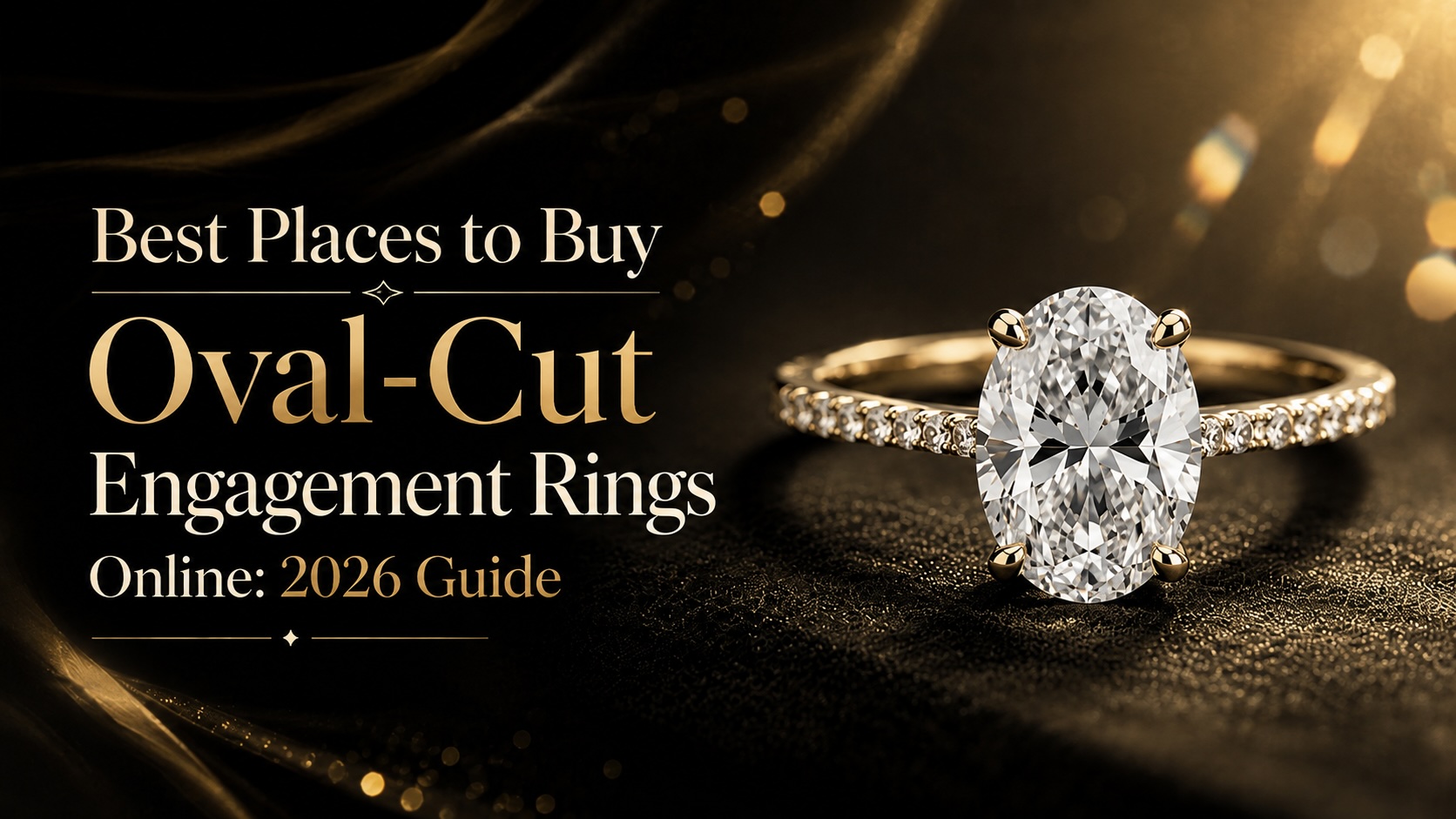
Oval-cut diamonds have become one of the most desirable choices for engagement rings, combining much of the brilliance of a round diamond with an elongated shape that can provide greater visual size for its carat weight.
They are elegant, flattering on the finger, and incredibly versatile. An oval diamond can look equally at home in a classic solitaire, a delicate pavé setting, a hidden halo, or an elaborate three-stone ring.
However, buying a great oval diamond requires more care than simply filtering for carat, color, clarity, and an “Excellent” cut.
Unlike round brilliant diamonds, GIA does not assign an overall cut grade to oval diamonds. That makes the visual characteristics of the individual stone much more important.
Two oval diamonds with virtually identical specifications on their grading reports can look completely different because of differences in:
- Bow-tie effect
- Length-to-width ratio
- Facet pattern
- Symmetry
- Light return
- Face-up spread
- Overall outline
That makes choosing the right retailer particularly important.
The best online diamond retailers provide high-quality photography or video, trustworthy grading reports, enough choice to compare different oval shapes, and expert support when you need a second opinion.
For 2026, these are my favorite places to buy an oval-cut engagement ring online.
Best Places to Buy Oval Engagement Rings at a Glance
| Rank | Retailer | Best For |
|---|---|---|
| 1 | Whiteflash | Quality-focused buyers and premium settings |
| 2 | Blue Nile | Huge oval diamond selection |
| 3 | Brilliant Earth | Modern settings and lab-grown ovals |
| 4 | Ritani | Price comparison and value |
| 5 | Diamonds by Lauren | Bespoke and distinctive oval rings |
My overall recommendation is Whiteflash for buyers who place diamond quality, expert guidance, and the quality of the finished engagement ring ahead of simply finding the biggest inventory.
However, oval diamonds are one shape where comparing several retailers can be particularly worthwhile.
Before shopping, I recommend reading my complete oval-cut diamond buying guide. It covers proportions, length-to-width ratios, bow ties, color, clarity, and the characteristics that separate an attractive oval from an average one.
1. Whiteflash: Best Overall for Quality-Focused Buyers
Best for: Quality-conscious buyers, expert guidance, Precision Lab ovals, and premium engagement ring settings
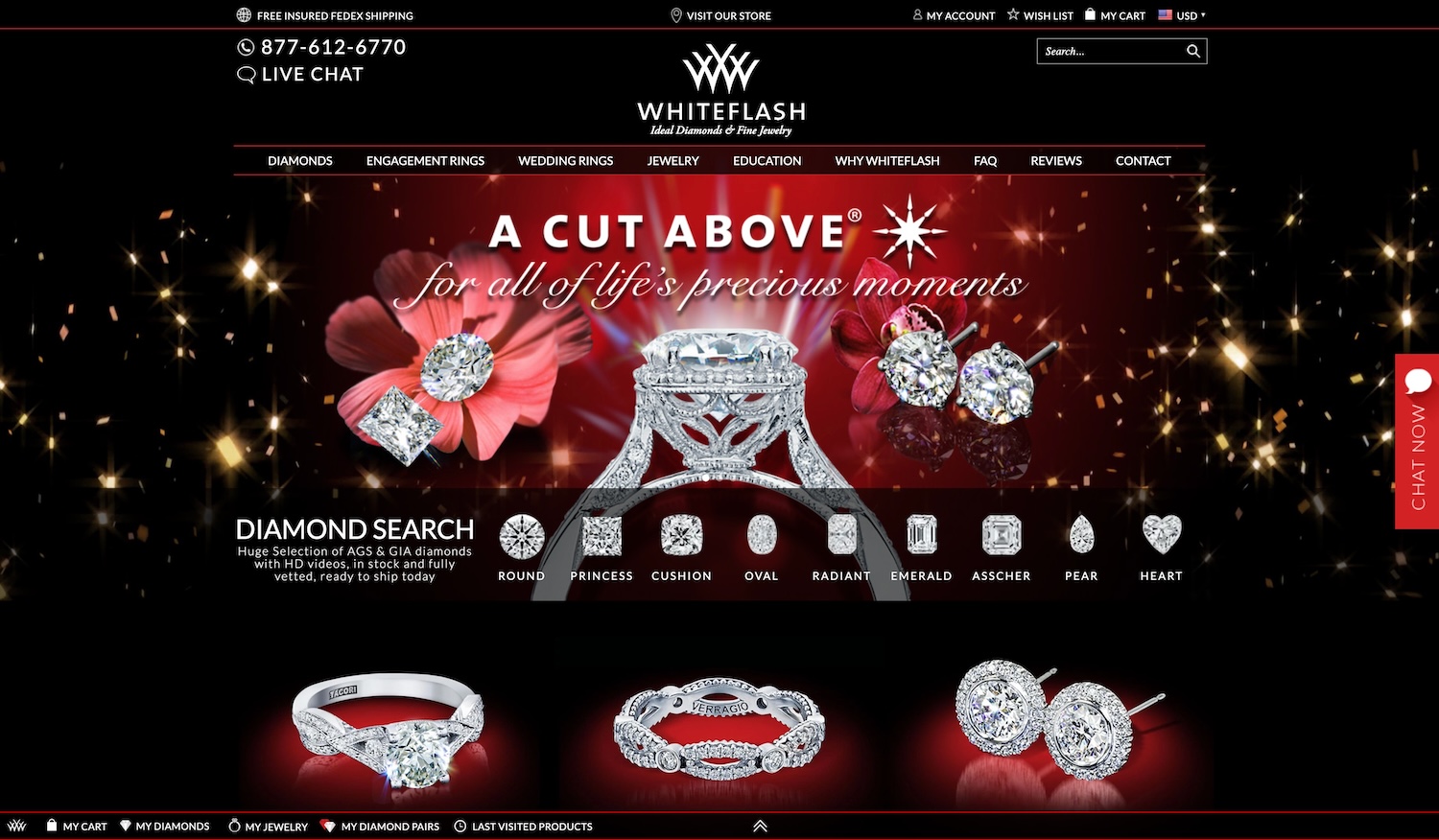
Whiteflash is my first choice for buyers who want a quality-led approach to purchasing an oval engagement ring.
The company is particularly well known for its emphasis on cut quality and diamond light performance. Its flagship A CUT ABOVE® collection is focused on super ideal diamonds, but it is important to understand that A CUT ABOVE® does not apply to standard oval diamonds.
If you are shopping for an oval, the purchasing process is therefore different.
You cannot simply look for the A CUT ABOVE® label and assume the work has been done for you. You still need to examine the individual oval’s proportions, imagery, shape, bow tie, and overall appearance.
Whiteflash currently offers both natural and lab-grown oval diamonds, including oval options within its Precision Lab inventory.
Why I Like Whiteflash for Oval Engagement Rings
Whiteflash offers several advantages:
- Natural and lab-grown oval diamonds
- Detailed diamond information
- High-quality photography and video on suitable inventory
- Knowledgeable diamond consultants
- A strong focus on cut and light performance
- Precision Lab oval diamonds
- An excellent selection of engagement ring settings
- Premium designer engagement ring brands
That last point is important.
An engagement ring is not just a loose diamond. The quality, proportions, durability, and finish of the setting can have a significant impact on the finished piece.
Whiteflash offers its own engagement ring designs alongside established designer collections, giving you plenty of choice if you want something more distinctive than a basic solitaire.
Whiteflash Precision Lab Ovals
Whiteflash becomes particularly interesting if you are considering a lab-grown oval diamond.
Its Precision Lab inventory includes oval diamonds alongside round, princess, and other shapes. Whiteflash emphasizes screening, grading information, video, and additional diamond analysis across this collection.
For a lab-grown oval, I would prioritize quality rather than simply choosing the largest diamond your budget allows.
The lower pricing of lab-grown diamonds can make 2, 3, and even larger carat weights accessible, but a bigger oval is not automatically a better oval.
You still need to look at:
- Bow tie
- Transparency
- Facet pattern
- Length-to-width ratio
- Symmetry
- Color
- Visible inclusions
- Overall visual performance
A beautiful 2.25 carat oval can be a much better purchase than a mediocre 3 carat stone.
Whiteflash Engagement Ring Settings
Oval diamonds work particularly well in:
- Solitaire settings
- Hidden halos
- Pavé designs
- Three-stone rings
- Cathedral settings
- Yellow gold settings
- Designer engagement rings
A slim solitaire can emphasize the elongated outline of the oval and make the center diamond appear even larger.
If you want something more ornate, a hidden halo or pavé band can add sparkle without overwhelming the center stone.
My verdict: Whiteflash is my first choice for buyers who prioritize quality, expert guidance, and the complete engagement ring rather than simply searching for the cheapest oval available.
2. Blue Nile: Best for Oval Diamond Selection
Best for: Comparing a very large selection of natural and lab-grown oval diamonds

Blue Nile is one of the best places to shop if you want choice.
That is particularly valuable with oval diamonds because shape preference is extremely personal.
One buyer might love a relatively full 1.35 length-to-width ratio, while another might find a longer 1.48 oval much more attractive.
Blue Nile currently offers a very large selection of oval-compatible engagement ring settings alongside natural and lab-grown center diamonds.
Why Blue Nile Works So Well for Ovals
Blue Nile gives you the opportunity to compare a large number of diamonds within a fairly narrow specification range.
For example, you could begin with:
Carat: 1.40-1.60 ct
Color: G-I
Clarity: VS2-SI1
Polish: Excellent
Symmetry: Excellent or Very Good
Then compare the actual diamonds rather than automatically selecting the heaviest.
Look closely at:
- Overall shape
- Length-to-width ratio
- Bow tie
- Dark areas
- Visible inclusions
- Measurements
- Symmetry
- Face-up appearance
This is one of the biggest advantages of shopping with a retailer that has a large inventory.
You may discover that you strongly prefer one oval outline over another, even when both diamonds have nearly identical specifications.
Blue Nile Oval Engagement Ring Settings
Blue Nile offers oval-compatible settings across a wide variety of styles, including:
- Solitaire
- Hidden halo
- Traditional halo
- Pavé
- Three-stone
- Yellow gold
- White gold
- Rose gold
- Platinum
- East-west designs
The east-west setting is particularly interesting if you want something more contemporary.
Instead of positioning the oval vertically along the finger, the diamond is rotated horizontally across it.
Oval Diamonds Can Look Larger Than Rounds
One of the biggest attractions of an oval diamond is its face-up spread.
An oval’s elongated outline generally gives it a larger visible footprint than a round brilliant of the same carat weight.
This means someone considering a 1.5 carat round may find that a 1.5 carat oval gives them considerably more finger coverage.
However, do not judge the diamond by carat weight alone.
Always check the actual measurements.
A poorly proportioned diamond can hide additional weight in its depth without providing the visual size you expected.
My verdict: Blue Nile is my favorite option if your priority is comparing a huge range of oval diamonds until you find exactly the shape, specifications, and price you want.
3. Brilliant Earth: Best for Modern Settings and Lab-Grown Ovals
Best for: Modern engagement ring designs and buyers considering lab-grown oval diamonds

Read my Brilliant Earth review
Brilliant Earth earns third place because it combines a substantial diamond selection with one of the widest ranges of contemporary engagement ring designs.
Its current oval engagement ring collection includes numerous solitaire, hidden halo, three-stone, pavé, bezel, and more decorative designs.
This makes Brilliant Earth particularly appealing if the setting is just as important to you as the diamond.
Excellent for Lab-Grown Oval Diamonds
Brilliant Earth is also one of the first retailers I would consider if you are shopping for a lab-grown oval.
The price difference between natural and lab-grown diamonds means your budget can usually stretch to a substantially larger lab-grown stone.
A budget that purchases approximately a 1 to 1.5 carat natural diamond might put a much larger lab-grown oval within reach.
But bigger does not automatically mean better.
A large oval with a severe bow tie, unattractive facet pattern, or poor transparency is not suddenly a good diamond because it weighs 3 carats.
The same quality rules still apply.
You can learn more about the differences between the two in my lab-grown diamond guide and lab-grown vs. natural diamond comparison.
Brilliant Earth Settings
Brilliant Earth’s current oval collection demonstrates just how versatile the shape is. Designs include classic solitaires, hidden halos, three-stone rings, bezel styles, and more elaborate diamond-accented settings.
Some of my favorite combinations for an oval include:
Thin solitaire: Makes the center diamond the focus.
Hidden halo: Adds sparkle from the side without visually surrounding the oval.
Pavé band: Creates more brilliance across the finger.
Bezel: Gives an oval a clean and contemporary appearance.
Three-stone: Adds considerable finger coverage and can look exceptional with pear or round side stones.
My verdict: Brilliant Earth is particularly strong if you want a lab-grown oval or a more distinctive contemporary engagement ring setting.
4. Ritani: Best for Value and Price Comparison
Best for: Price-conscious shoppers who want to compare lots of diamonds
Ritani is my fourth choice and is particularly worth checking if value and price comparison are major priorities.
Its diamond search allows shoppers to filter inventory by the usual characteristics such as carat, color, clarity, cut-related parameters, and price. My current Ritani review covers the overall buying experience in more detail.
The biggest warning here is simple:
Do not compare oval diamonds by specifications and price alone.
Consider these two hypothetical diamonds:
Diamond A: 1.50 ct, G, VS2
Diamond B: 1.52 ct, G, VS2
If Diamond B costs significantly less, it is easy to assume it represents better value.
But you still need to inspect:
- Measurements
- Length-to-width ratio
- Bow tie
- Symmetry
- Depth
- Table
- Inclusion placement
- Facet pattern
- Grading report
- Actual appearance
A cheaper diamond is only better value if the diamond itself is good.
That distinction becomes especially important with fancy shapes.
My verdict: Ritani deserves a place on your comparison list, particularly if you’re trying to maximize carat weight or find competitive pricing, but every oval should still be assessed individually.
5. Diamonds by Lauren: Best for Bespoke and Distinctive Oval Rings
Best for: Custom designs, unusual diamonds, fancy colors, and buyers who want something less mainstream
Diamonds by Lauren is the most specialist retailer in this list.
Rather than focusing primarily on enormous searchable databases, the New York-based jeweler has a strong emphasis on custom-made diamond jewelry, natural diamonds, lab-grown diamonds, and fancy-colored stones. Its current inventory includes oval-shaped natural and lab-grown diamonds and custom rings.
That makes it particularly interesting if you do not want your engagement ring to feel like an off-the-shelf design.
Why Consider Diamonds by Lauren?
Its strengths include:
- Bespoke engagement rings
- Natural diamonds
- Lab-grown diamonds
- Fancy-colored diamonds
- Distinctive settings
- Unusual combinations
- More individualized pieces
If you want a traditional colorless oval solitaire, the first three retailers on this list may provide an easier starting point.
If you want something more distinctive, Diamonds by Lauren becomes much more interesting.
For example, you might be considering:
- A yellow oval diamond
- A colored lab-grown oval
- A three-stone design
- A halo with contrasting colors
- A custom setting
- A less conventional oval ring
Diamonds by Lauren currently features both natural and lab-grown ring categories, including oval-shaped stones.
Particularly Interesting for Fancy Color
Oval is also an excellent shape for fancy-colored diamonds.
Rather than trying to maximize a colorless appearance, the objective with a fancy yellow, pink, blue, or other colored diamond is often to maximize and distribute the color attractively throughout the stone.
Diamonds by Lauren has long focused heavily on fancy-colored diamonds, which gives it a different proposition from the larger general diamond retailers in this guide.
My verdict: Diamonds by Lauren is my pick for buyers who want a bespoke oval engagement ring, a fancy-colored diamond, or something more distinctive than a conventional online engagement ring.
Comparing the Best Places to Buy Oval Engagement Rings
| Retailer | Best For | Natural | Lab-Grown | My Rating |
|---|---|---|---|---|
| Whiteflash | Quality and expert guidance | Yes | Yes | Best Overall |
| Blue Nile | Selection | Yes | Yes | Best Selection |
| Brilliant Earth | Modern settings and lab-grown | Yes | Yes | Best for Design |
| Ritani | Value comparison | Yes | Yes | Best for Price Shopping |
| Diamonds by Lauren | Custom and unusual rings | Yes | Yes | Best Specialist |
How I Ranked the Best Places to Buy Oval Engagement Rings
Oval diamonds require a slightly different shopping strategy from round brilliants.
These are the factors I consider most important.
Diamond Imagery and Video
With an oval diamond, I want to see the actual stone.
A grading report alone is not enough.
High-resolution photography and video can reveal:
- Bow ties
- Uneven light return
- Shape
- Dark areas
- Visible inclusions
- Facet pattern
- Symmetry
I would avoid buying an oval diamond from a generic stock photograph.
Diamond Selection
A good selection matters because there is no single “correct” oval shape.
Different shoppers will prefer different length-to-width ratios and outlines.
Diamond Certification
A reliable grading report provides independent information about:
- Carat weight
- Color
- Clarity
- Measurements
- Polish
- Symmetry
- Fluorescence
For natural diamonds, GIA remains my preferred starting point.
Read my complete diamond certification guide if you need help understanding the different laboratories.
Customer Support
Expert guidance becomes particularly useful with fancy-shaped diamonds because there are important visual characteristics that cannot be summarized by the 4Cs.
Engagement Ring Settings
The center diamond may be the star, but the quality of the setting still matters.
I favor retailers that offer a good selection of secure, well-made engagement rings.
Natural and Lab-Grown Choice
More buyers are considering both origins.
Retailers that offer strong natural and lab-grown options therefore give shoppers more flexibility.
How to Choose a Great Oval Diamond
Finding the right retailer is only the first step.
You then need to choose the actual diamond.
1. Understand Length-to-Width Ratio
The length-to-width ratio tells you how elongated an oval appears.
To calculate it:
Length ÷ Width = Length-to-width ratio
For example:
9.00 mm ÷ 6.00 mm = 1.50
There is no universal ideal ratio.
My oval-cut diamond guide looks at this in greater detail, but approximately 1.30 to 1.50 covers many conventionally shaped ovals.
As a rough visual guide:
| Ratio | Appearance |
|---|---|
| 1.30-1.35 | Fuller and rounder |
| 1.36-1.42 | Balanced traditional oval |
| 1.43-1.50 | More elongated |
| 1.50+ | Long and slender |
These are not quality grades.
A 1.42 oval is not automatically better than a 1.49 oval.
This is primarily about preference.
I personally like the elegant appearance produced by many ovals around 1.40 to 1.50, but you should compare several shapes before deciding.
2. Watch for the Bow-Tie Effect
The bow-tie effect is one of the most important things to assess when buying an oval diamond.
It appears as a darker bow-shaped area through the center of the stone.
A degree of bow tie is common in elongated brilliant-cut diamonds.
The objective is not necessarily to find an oval with absolutely no bow tie.
Instead, you want to avoid one where the dark area dominates the appearance of the diamond.
Brilliant Earth’s current oval guidance similarly advises shoppers to visually inspect this characteristic rather than relying purely on a certificate.
This is why video matters so much.
A grading report does not give you a bow-tie grade.
You need to see it yourself.
3. There Is No GIA Overall Cut Grade for Oval Diamonds
This is one of the biggest mistakes shoppers make.
You may see retailers describing oval diamonds using terms such as:
- Ideal
- Excellent
- Very Good
These can be useful as retailer-specific filtering systems, but they should not be confused with the standardized GIA overall cut grade used for round brilliant diamonds.
GIA does not currently provide an overall cut grade for oval brilliant diamonds.
Instead, you need to assess:
- Shape
- Proportions
- Polish
- Symmetry
- Bow tie
- Facet pattern
- Light performance
- Overall visual appeal
That makes oval diamonds much more individual than rounds.
4. Check the Actual Measurements
Carat measures weight.
It does not directly measure visible size.
Two 1.50 carat oval diamonds could have noticeably different dimensions.
For example:
Oval A: 9.20 × 6.40 mm
Oval B: 8.75 × 6.30 mm
Both could weigh 1.50 carats.
Oval A may have a noticeably larger face-up footprint.
This is one reason oval diamonds are so attractive to buyers trying to maximize visual size.
Their elongated shape can provide excellent finger coverage without necessarily requiring a huge increase in carat weight.
Always compare:
- Length
- Width
- Depth
- Carat weight
Never compare carat alone.
5. Don’t Overpay for Clarity
For most oval engagement rings, I am looking for a diamond that appears eye clean.
I am not necessarily looking for the highest clarity grade.
My starting point would generally be:
VS2
I would also happily consider:
SI1 if the diamond is genuinely eye clean and the inclusions are favorable
This can save a considerable amount of money compared with unnecessarily paying for VVS or flawless clarity.
Read my diamond clarity guide and SI1 diamond guide for more information.
Pay particular attention to the location and nature of inclusions rather than just the clarity letters.
6. G-H Color Is a Great Starting Point
For a natural oval diamond, I would generally start around G-H color.
These grades can offer an excellent balance between a bright, white appearance and value.
I color can also be worth considering, particularly if:
- The diamond is well cut
- You are using yellow gold
- You are using rose gold
- You are not particularly sensitive to warmth
Oval diamonds can sometimes show more color toward their ends than a round brilliant, so this is another area where viewing the actual stone is useful.
Read my G color diamond guide and broader diamond color guide before deciding how high you need to go.
7. Natural vs. Lab-Grown Oval Engagement Rings
Oval diamonds are particularly attractive in the lab-grown market because the lower pricing makes larger center stones much more accessible.
Choose Natural If:
- Natural geological origin matters to you
- Rarity is part of the appeal
- You want a traditionally mined diamond
- You are comfortable getting less carat weight for the same budget
Choose Lab-Grown If:
- Maximum visual size is important
- You want a 2, 3, or larger carat center stone without a natural-diamond price
- Geological origin is less important to you
- You understand the very different pricing and resale dynamics
Both natural and lab-grown diamonds are diamonds.
Their main distinction is origin.
Brilliant Earth and Blue Nile currently offer both natural and lab-grown options across their engagement ring collections, while Whiteflash also offers oval lab-grown inventory through its Precision Lab selection.
Read my lab-grown diamond guide and natural vs. lab-grown comparison before deciding.
Best Settings for an Oval Engagement Ring
One of the biggest advantages of the oval shape is its versatility.
Solitaire
My favorite for a particularly beautiful oval.
A thin band puts the focus completely on the center diamond.
Hidden Halo
A hidden halo positions small diamonds underneath the center stone.
You get extra sparkle from the side without dramatically changing the face-up appearance of the ring.
Pavé
Small diamonds set into the band add additional sparkle.
This can also make the overall ring appear more substantial.
Three-Stone
Oval center stones pair beautifully with:
- Pear side stones
- Round diamonds
- Smaller ovals
- Tapered baguettes
A three-stone ring provides excellent finger coverage.
Traditional Halo
A halo surrounds the center stone with smaller diamonds.
This can make the oval look significantly larger.
Bezel
A bezel surrounds the edge of the diamond with metal.
It creates a clean, modern appearance while offering additional protection.
East-West
An east-west oval turns the diamond horizontally across the finger.
Blue Nile currently offers oval-compatible east-west styles alongside more traditional north-south settings.
It is a particularly good choice for someone who loves oval diamonds but wants a less conventional engagement ring.
How Much Does an Oval Engagement Ring Cost?
There is no meaningful single price for an oval engagement ring.
The final price depends on:
- Natural vs. lab-grown
- Carat weight
- Color
- Clarity
- Diamond quality
- Certification
- Setting
- Metal
- Designer
- Side diamonds
A 1.5 carat natural oval can cost dramatically more than a 1.5 carat lab-grown oval.
Likewise, two natural 1.5 carat ovals can differ significantly in price depending on their color, clarity, proportions, and overall quality.
This is why I do not recommend shopping by carat weight alone.
A large but mediocre oval is not necessarily good value.
What Oval Diamond Specifications Would I Choose?
If I were buying a natural oval engagement ring today, my initial filters would probably look something like this:
Carat: Budget dependent
Color: G-H, with I considered
Clarity: VS2, with eye-clean SI1 considered
Certification: GIA preferred
Polish: Excellent
Symmetry: Excellent or Very Good
Length-to-width ratio: Approximately 1.35-1.50
Bow tie: Minimal or visually acceptable
Video: Strongly preferred
These are filters, not rules.
The final decision needs to be visual.
Fancy-shaped diamonds are simply too individual to reduce the entire decision to numbers.
Common Mistakes When Buying an Oval Engagement Ring
Buying the Biggest Diamond You Can Afford
Carat weight is not a measure of beauty.
A slightly smaller oval with better proportions and light performance can look much more impressive.
Ignoring the Bow Tie
A prominent bow tie can dominate the entire diamond.
Always inspect the actual stone.
Choosing From the Grading Report Alone
The report cannot tell you whether you will find the shape attractive.
Treating a Retailer “Ideal” Grade Like a GIA Cut Grade
There is no standardized GIA overall cut grade for oval brilliant diamonds.
Obsessing Over Length-to-Width Ratio
A particular ratio is not automatically superior.
Choose the outline you actually prefer.
Overspending on Clarity
You generally do not need VVS clarity if a lower-graded diamond is completely eye clean.
Ignoring Millimeter Measurements
Carat weight alone does not tell you how large the diamond will look.
Buying From Stock Photography
I want to see the actual oval whenever possible.
This is one of the key reasons I favor established retailers such as Whiteflash, Blue Nile, and Brilliant Earth.
Frequently Asked Questions
Are oval diamonds still popular in 2026?
Yes.
Oval diamonds remain one of the most prominent fancy shapes across major engagement ring collections in 2026. Blue Nile and Brilliant Earth both currently offer extensive oval engagement ring categories, while Whiteflash continues to stock natural and lab-grown oval diamonds.
Their combination of brilliance, finger coverage, and elongated styling gives them appeal beyond a short-term trend.
Do oval diamonds look bigger than round diamonds?
They often do.
The elongated outline means an oval can have a larger face-up footprint than a round diamond at the same carat weight.
Always compare the actual millimeter measurements, though, because proportions vary between individual diamonds.
What is the best oval diamond ratio?
There is no universal best ratio.
Approximately 1.30 to 1.50 covers many conventionally shaped ovals.
The right choice depends on whether you prefer a fuller or more elongated appearance.
Do oval diamonds have a GIA cut grade?
No.
GIA does not currently provide an overall cut grade for oval brilliant diamonds in the same way it grades the cut of round brilliants.
This makes visual assessment particularly important.
What is the best clarity for an oval diamond?
VS2 is an excellent starting point.
An eye-clean SI1 can also offer superb value.
I would not automatically pay for VVS or flawless clarity unless that level of rarity is personally important to you.
What color is best for an oval diamond?
G-H is my usual starting point for a natural oval.
I can also offer excellent value, particularly in yellow or rose gold settings.
Should I buy a natural or lab-grown oval?
That depends on your priorities.
Choose natural if geological origin and rarity matter to you.
Choose lab-grown if maximizing size and specifications for your budget matters more.
Are oval diamonds good for engagement rings?
Absolutely.
They offer excellent sparkle, flattering proportions, good face-up spread, and enormous flexibility when choosing a setting.
Final Verdict: Where Should You Buy an Oval Engagement Ring?
For 2026, my rankings are:
1. Whiteflash: Best Overall
My first choice for buyers prioritizing quality, expert guidance, diamond evaluation, customer service, and premium engagement ring settings.
Whiteflash is particularly worth considering for buyers interested in its Precision Lab oval diamonds.
2. Blue Nile: Best Selection
Blue Nile’s biggest advantage is choice.
It is one of the best places to compare different oval outlines, length-to-width ratios, carat weights, natural diamonds, lab-grown diamonds, and engagement ring settings.
3. Brilliant Earth: Best for Settings and Lab-Grown Ovals
Read my Brilliant Earth review
Particularly strong if you want a contemporary engagement ring setting or are considering a larger lab-grown oval.
Its current oval collection spans solitaires, hidden halos, bezels, three-stone rings, pavé designs, and many other styles.
4. Ritani: Best for Value Comparison
Worth adding to your shortlist if price comparison is particularly important.
Just remember that a cheap oval is not necessarily good value unless the proportions and appearance are also attractive.
5. Diamonds by Lauren: Best for Bespoke Rings
My specialist choice for custom oval engagement rings, fancy-colored diamonds, and buyers who want something less conventional.
Diamonds by Lauren currently offers both natural and lab-grown diamond jewelry and has a particularly strong emphasis on custom designs and fancy colors.
Ultimately, buying an oval engagement ring requires a little more visual judgment than buying a round brilliant.
Do not choose your oval from the grading report alone.
Look closely at:
- Bow tie
- Length-to-width ratio
- Shape
- Measurements
- Symmetry
- Facet pattern
- Visible inclusions
- Color
- Overall visual appeal
Start with my complete oval-cut diamond guide if you want to understand these characteristics in more detail.
When you are ready to shop, I would begin with Whiteflash, use Blue Nile to compare a broader range of ovals, and look closely at Brilliant Earth if lab-grown diamonds or contemporary settings are particularly important to you.
For buyers who want something more unusual, bespoke, or colorful, Diamonds by Lauren is also well worth exploring.

I’m Louis Jacobs, the creator of Diamond Expert, a platform where I share my lifetime’s knowledge of diamonds. Born and raised in Antwerp, Belgium, the world’s diamond hub, my fascination with these precious gems began at a young age. I spent over three decades in the diamond industry, earning the reputation of a trusted advisor among friends and family for diamond purchases, particularly engagement rings. Now retired, I’m dedicated to providing online guidance to make your diamond buying experience informed and successful.