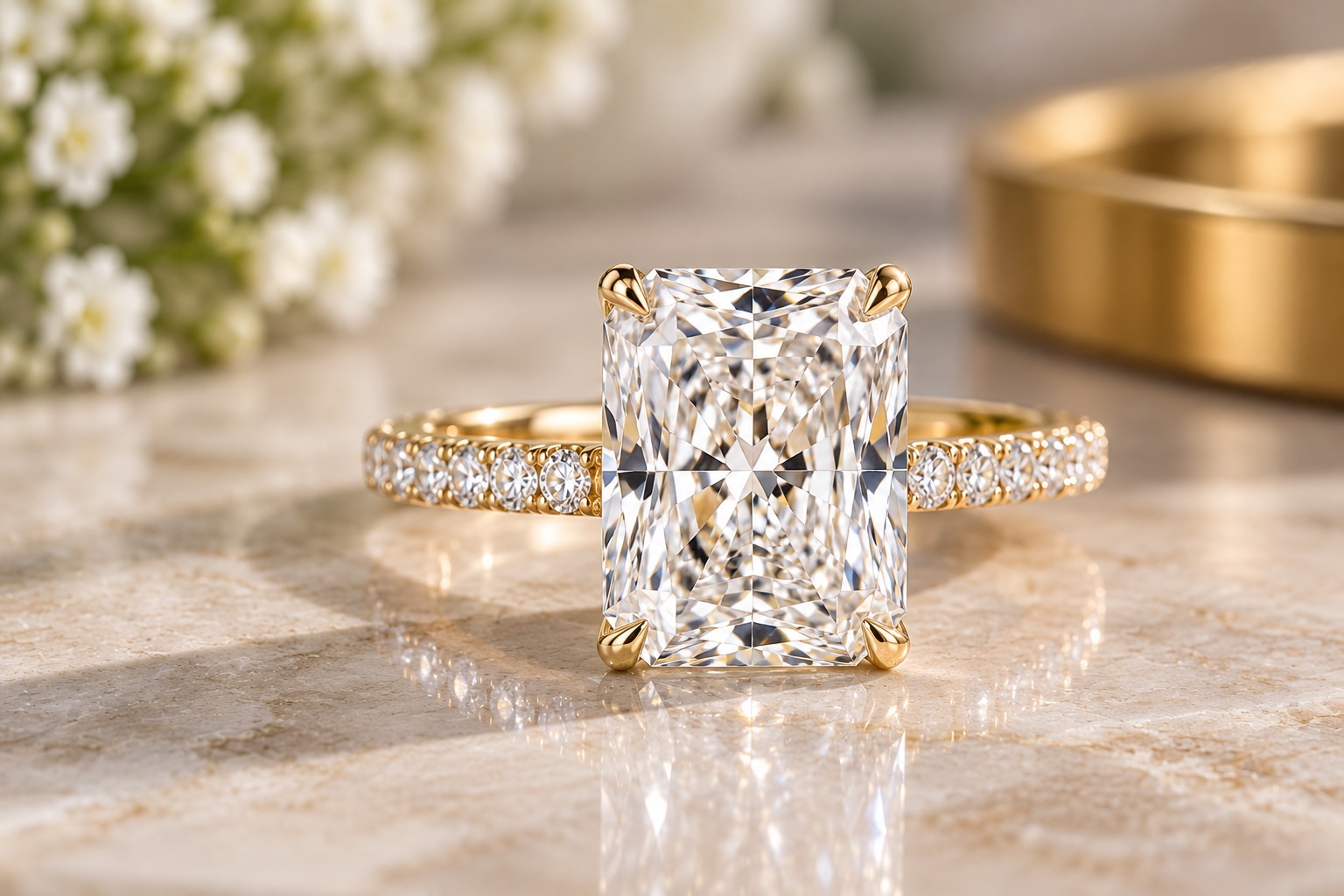
Radiant-cut diamonds combine the elongated outline of an emerald cut with brilliant-style faceting, giving them considerably more sparkle than a traditional step cut.
They are also one of the harder diamond shapes to buy from a grading report alone.
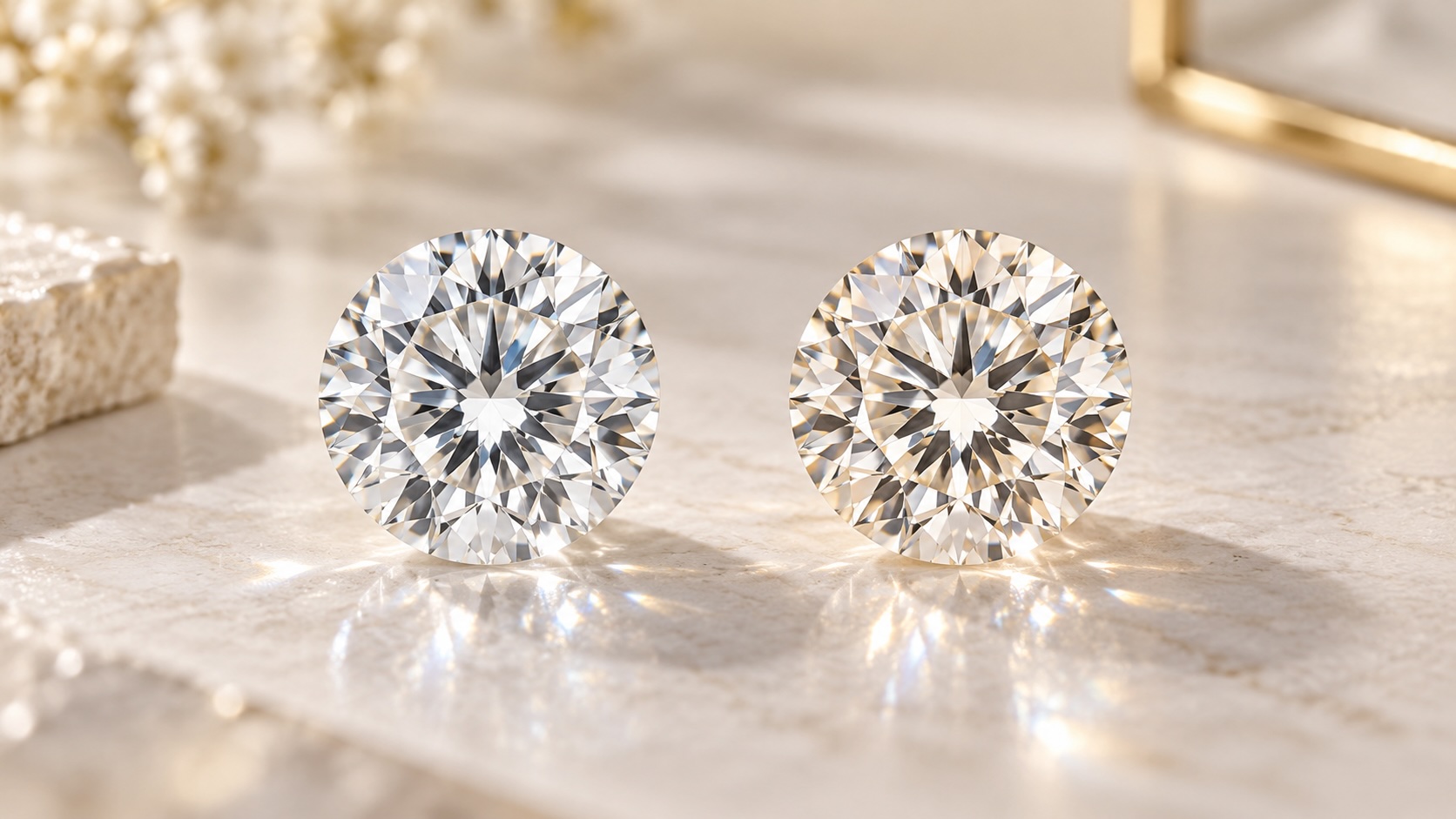
Two radiant cuts with similar carat, color, clarity, table, and depth percentages can look completely different because radiant facet patterns vary considerably. Some have larger, more defined reflections, while others produce a more fragmented or “crushed ice” appearance.
That makes video, face-up dimensions, outline, facet pattern, and overall brightness particularly important.
For 2026, these are the online retailers I would compare first:
| Rank | Retailer | Best For |
|---|---|---|
| 1 | Whiteflash | Quality-focused buying and premium settings |
| 2 | Blue Nile | Large radiant-cut diamond selection |
| 3 | Brilliant Earth | Natural and lab-grown radiants with extensive settings |
| 4 | Ritani | Price comparison and large searchable inventory |
| 5 | Diamonds by Lauren | Fancy colors, unusual radiants, and custom jewelry |
1. Whiteflash: Best Overall for Quality-Focused Buyers
Best for: Expert guidance, quality-focused diamond selection, and premium engagement ring settings
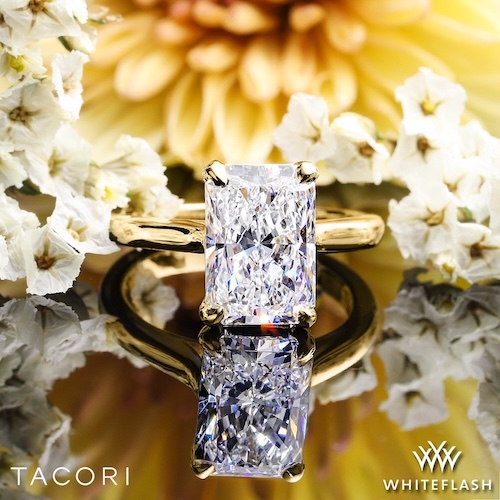
Whiteflash is my first place to look for buyers who want more guidance choosing a radiant-cut diamond rather than simply searching an enormous database alone.
Radiants require more visual assessment than round brilliants because there is no single proportion recipe that guarantees an attractive stone. A good radiant should have:
- An attractive outline
- Strong face-up spread
- Balanced brightness
- Limited distracting darkness
- An appealing facet pattern
- Good transparency
Whiteflash also carries a strong range of premium engagement ring settings, including designer collections, which is useful if you want the completed ring to feel more distinctive.
Why Choose Whiteflash?
Whiteflash is particularly appealing if you want:
- Experienced diamond consultants
- Natural and lab-grown diamond options
- Detailed diamond imagery where available
- Premium solitaire, halo, and pavé settings
- Designer engagement rings
- A quality-first buying approach
Radiant diamonds can vary enormously in appearance even when their certificates look almost identical, so having somebody help evaluate the actual stone can be valuable.
My First Choice for a Quality-Focused Radiant Ring
I would start with Whiteflash if you want a more guided diamond-buying process and a strong selection of premium engagement ring settings.
Radiant cuts need to be judged visually, so I would prioritize the actual video, outline, dimensions, and facet pattern rather than choosing purely from table and depth percentages.
You can also read my full Whiteflash review.
2. Blue Nile: Best for Radiant-Cut Selection
Best for: Comparing a large number of radiant diamonds
Blue Nile is particularly useful if you want to compare a wide range of radiant-cut diamonds across different:
- Carat weights
- Length-to-width ratios
- Color grades
- Clarity grades
- Natural and lab-grown origins
- Price points
That breadth makes it easier to compare diamonds with very similar specifications and see how dramatically their actual appearances can differ.
This is especially useful with elongated radiants.
A 1.30 length-to-width ratio and a 1.45 ratio can create noticeably different looks even when both diamonds have similar carat weights.
Why Choose Blue Nile?
- Large online diamond inventory
- Strong radiant-cut availability
- Natural and lab-grown diamonds
- Extensive engagement ring settings
- Useful filters
- 360-degree imagery on many stones
- Wide range of price points
Blue Nile is a good option for shoppers who are comfortable comparing diamonds independently and want plenty of choice.
3. Brilliant Earth: Best for Design Variety
Best for: Natural and lab-grown radiant diamonds with a large setting selection
Read my Brilliant Earth review
Brilliant Earth combines a large diamond inventory with one of the broader engagement ring setting selections among major online retailers.
That makes it particularly useful if the finished ring design matters as much as the center stone.
Radiant-cut diamonds work well with many setting styles, including:
- Solitaires
- Hidden halos
- Pavé bands
- Three-stone rings
- Cathedral settings
- Bezel designs
- Vintage-inspired settings
Brilliant Earth also gives buyers the ability to compare natural and lab-grown radiant diamonds within the same shopping experience.
Why Choose Brilliant Earth?
- Natural and lab-grown radiant diamonds
- Large engagement ring setting selection
- Contemporary and vintage-inspired designs
- Physical showrooms
- Online appointments
- Customizable ring combinations
- Fine jewelry and wedding bands
If you want an elongated radiant in a more design-led setting, Brilliant Earth is one of the strongest places to compare.
4. Ritani: Best for Price Comparison
Best for: Research-heavy shoppers and comparing prices
Ritani is useful for buyers who want to compare a large number of radiant diamonds while paying close attention to specifications and pricing.
The retailer has traditionally emphasized transparency and detailed filtering, which suits shoppers who enjoy narrowing down diamonds themselves.
Why Choose Ritani?
- Large searchable diamond inventory
- Natural and lab-grown diamonds
- Detailed specifications
- Useful comparison tools
- Broad price range
- Engagement ring settings
Ritani can be particularly useful as a comparison point, even if you ultimately purchase elsewhere.
The main warning is the same as with any large virtual inventory:
A good certificate does not guarantee a beautiful radiant.
Video remains essential.
5. Diamonds by Lauren: Best for Unusual and Fancy Colored Radiants
Best for: Fancy colors, unusual stones, and custom jewelry
Diamonds by Lauren is especially interesting for shoppers who want something outside the standard colorless radiant market.
The company has extensive experience with:
- Fancy yellow diamonds
- Pink diamonds
- Brown diamonds
- Colorless radiants
- Elongated radiants
- Custom engagement rings
- Unusual three-stone designs
Radiant cuts are particularly popular with fancy colored diamonds because the faceting can help concentrate and emphasize body color.
Why Choose Diamonds by Lauren?
- Strong fancy colored diamond expertise
- Natural and lab-grown options
- Custom jewelry
- Individually photographed stones
- Unusual shapes and proportions
- Personalized service
If you want a yellow radiant, a distinctive elongated stone, or a custom ring rather than a conventional catalog design, Diamonds by Lauren is well worth considering.
What Makes a Good Radiant-Cut Diamond?
Unlike round brilliants, radiant cuts do not have one narrow set of “ideal” proportions.
I would look at several factors together.
Length-to-Width Ratio
Radiants can be square or rectangular.
As a general visual guide:
- 1.00 to 1.10: Square to slightly rectangular
- 1.15 to 1.30: Moderately elongated
- 1.30 to 1.45: Popular elongated look
- 1.45+: Noticeably long and narrow
There is no universally correct ratio.
Choose the outline you actually prefer.
Crushed Ice vs. Larger Facets
Radiant diamonds can show very different facet patterns.
Some have larger, more organized flashes of light.
Others display a fragmented appearance often described as crushed ice.
Neither is automatically better.
Some buyers love the lively, glittery look of crushed ice. Others prefer larger, more distinct reflections.
The mistake is choosing from the grading report without looking at the diamond.
Does a Radiant Diamond Have a Bow Tie?
Radiants can show darker areas across their center, particularly elongated stones.
However, the effect is generally more complicated than the classic bow tie associated with ovals, pears, and marquises.
Some contrast is normal and necessary for scintillation.
The concern is when the center remains persistently dark or visually dead as the diamond moves.
Good video is therefore essential.
How Much Does a 1 Carat Radiant Look Like?
Radiant diamonds can face up differently depending on their depth and length-to-width ratio.
An elongated 1 carat radiant may cover more finger length than a square one, but that does not necessarily mean it has more surface area overall.
Always check the actual:
length × width measurements
rather than assuming every 1 carat radiant will appear the same size.
This is particularly important when comparing stones close to major carat thresholds.
What Color Grade Is Best for a Radiant?
Radiant cuts can retain more visible body color than some round brilliants.
For a white-metal setting, I would often begin around:
G to H color
and adjust according to budget and sensitivity to warmth.
For yellow or rose gold, slightly warmer grades can provide excellent value.
If you are shopping for a fancy yellow radiant, the buying strategy changes completely because stronger color becomes desirable rather than something to minimize.
What Clarity Grade Should You Buy?
You generally do not need VVS clarity.
A well-chosen:
VS1, VS2, or eye-clean SI1
can provide excellent value.
The key is to inspect where the inclusions are and whether they can be seen without magnification.
Radiants have busy brilliant-style faceting that can disguise inclusions surprisingly well.
Compare the Actual Diamond, Not Just the Certificate
For a quality-focused purchase, start with Whiteflash.
For sheer inventory, Blue Nile gives you a large number of radiant diamonds to compare.
And if you want natural and lab-grown options alongside an especially broad range of ring settings, Brilliant Earth is also worth exploring.
Whichever retailer you choose, compare video, dimensions, facet pattern, color distribution, and overall brightness, not simply carat, color, and clarity.
Natural vs. Lab-Grown Radiant Diamonds
Radiant cuts are available in both natural and lab-grown diamonds.
Natural Radiant Diamonds
Choose natural if geological origin, rarity, and the traditional diamond market matter most to you.
Lab-Grown Radiant Diamonds
Lab-grown radiants can provide substantially more carat weight for the same budget.
This can be especially appealing with elongated stones, where buyers often want:
- 2 carats
- 3 carats
- 4 carats or more
However, do not assume every large lab-grown radiant is automatically a good buy.
You still need to assess:
- Cut
- Transparency
- Body color
- Growth-related nuance
- Facet pattern
- Dimensions
Frequently Asked Questions
Where is the best place to buy a radiant-cut engagement ring online?
I would start with Whiteflash for a quality-focused buying experience.
Blue Nile is excellent for broad selection, while Brilliant Earth is particularly strong if you want natural and lab-grown options combined with a large range of engagement ring designs.
What is the best length-to-width ratio for a radiant diamond?
There is no single best ratio.
Around 1.30 to 1.45 is popular for elongated radiants, while ratios closer to 1.00 produce a more square appearance.
Are radiant diamonds more affordable than round diamonds?
They can offer strong value per carat compared with round brilliants, but price still depends heavily on carat, color, clarity, and overall quality.
Do radiant diamonds look larger?
Elongated radiants can provide good finger coverage, particularly compared with compact square shapes.
Actual millimeter dimensions matter more than carat weight alone.
Is crushed ice bad in a radiant diamond?
No.
Crushed ice is a visual preference.
Some shoppers prefer a fragmented glittering pattern, while others prefer larger, more defined flashes.
Are lab-grown radiant diamonds worth buying?
They can be an excellent option if your priority is achieving a larger center stone for the budget.
Quality still varies, so evaluate transparency, color, cut, and actual video carefully.
Final Verdict
Radiant-cut engagement rings are a great option for buyers who want the sparkle of brilliant faceting combined with a square or elongated outline.
The challenge is that radiant diamonds vary far more than their grading reports suggest.
For that reason, my rankings prioritize retailers that make it easier to compare the actual stone.
My top choices are:
- Whiteflash for quality-focused buying and premium settings
- Blue Nile for a large radiant-cut selection
- Brilliant Earth for natural and lab-grown diamonds with extensive ring designs
- Ritani for price-focused comparison
- Diamonds by Lauren for fancy colors and custom work
Whichever retailer you use, do not buy a radiant cut from the certificate alone.
A beautiful radiant should have an attractive outline, strong face-up spread, appealing facet pattern, and good brightness throughout the stone.
Choose the diamond that looks best, not simply the one with the best numbers.

I’m Louis Jacobs, the creator of Diamond Expert, a platform where I share my lifetime’s knowledge of diamonds. Born and raised in Antwerp, Belgium, the world’s diamond hub, my fascination with these precious gems began at a young age. I spent over three decades in the diamond industry, earning the reputation of a trusted advisor among friends and family for diamond purchases, particularly engagement rings. Now retired, I’m dedicated to providing online guidance to make your diamond buying experience informed and successful.