Buying diamonds online used to sound risky. Today it is normal. Many people never set foot in a traditional jewelry store. They compare diamonds on a laptop, check reviews on their phone, and have a ring shipped to their door.
The upside is real. Online retailers often show more diamonds, sharper pricing, and better tools for understanding what you are buying. The downside is simple too. You cannot rely on flattering store lighting or a salesperson’s patter. You need to understand the basics yourself and judge the seller as carefully as the stone.
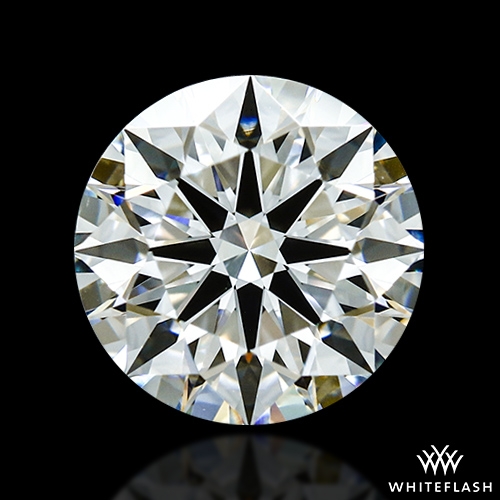
E VVS2 A CUT ABOVE® Hearts and Arrows Diamond from Whiteflash
This guide focuses on that.
- How to think about natural vs lab grown before you even open a search filter
- How to evaluate online retailers using imaging, grading reports, and policies
- What types of sites exist, and which style suits which buyer
By the end, “best place to buy diamonds online” will not be a single brand. It will be a clear set of rules you can use to pick the right place for you.
Whiteflash leads the pack with its in-stock selection of GIA Triple Excellent diamonds that also carry AGS Ideal Reports, plus their elite A CUT ABOVE® super ideal cut line. Every diamond includes full light-performance imaging, so you know exactly what you’re getting.
James Allen offers an enormous inventory and 360° imaging on nearly every stone, making browsing easy and intuitive. Brilliant Earth brings strong options for natural and lab-grown diamonds with a sustainability focus and clean, modern settings.
Why Buying Diamonds Online Makes Sense
There are good reasons the market moved online.
Compared with most local stores, buying online usually gives you:
- A much larger selection of shapes, sizes, and qualities
- Stronger price competition on comparable stones
- Access to specialist vendors that focus on cut quality or lab grown diamonds
- More time to think, compare, and research without feeling rushed
You also gain better tools. Many serious online retailers now provide:
- 360 degree video so you can inspect the diamond from every angle
- High resolution images and, for some stones, light performance images
- Filters that let you narrow down to very specific specs
You do give up a few things.
- You cannot feel the ring in hand on day one
- You cannot see it under your local store’s lighting before purchase
- You have to rely on shipping, returns, and after sales support
So the key question is not just “Is it safe to buy online?” It is “Which online retailers combine strong pricing and selection with proper data, sound grading, and solid policies?”
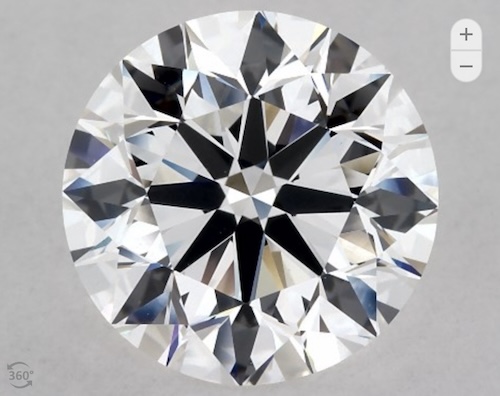
E-VS1 Excellent Cut Round Diamond from James Allen
Natural vs Lab Grown: Start With The Big Decision
Before you even open a search filter, you need to decide what kind of diamond you want to buy. That one choice changes your price range, your short list of retailers, and how you think about value.
Natural diamonds
Natural diamonds:
- Formed in the earth over millions of years
- Have geological rarity on their side
- Cost more per carat than lab grown
- Tend to hold value better over time, although diamonds in general are not an investment product
Why people pick them:
- They like the idea of something rare and natural
- They want a stone that fits traditional expectations for an engagement ring or heirloom
- They care about long term perception and resale more than sheer size
Lab grown diamonds
Lab grown diamonds:
- Are real diamonds, grown in a controlled environment
- Have the same crystal structure and optical properties as natural
- Cost significantly less for the same size and spec
- Have weaker resale, and prices have been dropping as supply grows
Why people pick them:
- They want more size and sparkle for the same budget
- They like the tech story or lower mining impact
- They care most about how the ring looks right now, not about long term resale
This decision changes where you shop.
- Some retailers specialize in top cut natural diamonds
- Some lean heavily into lab grown and value
- Others sit in the middle with strong options for both
If you are not sure yet, keep it simple.
- If you want rarity and tradition, lean natural
- If you want size and sparkle on a set budget, lean lab grown
Once you know that, you can judge retailers inside that lane instead of comparing completely different markets.
How To Judge Any Online Diamond Retailer
No matter which site you land on, the checklist is the same. The better they score here, the safer you are.
1. Reputation and trust
Look past the homepage.
- How long have they been in business
- Independent reviews on third party sites
- Mentions and feedback in forums or communities
- How they respond when something goes wrong, not just when a review is glowing
A good diamond at a weak retailer is still a risky buy.
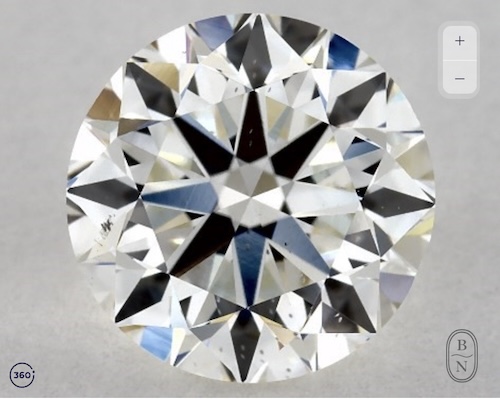
1.00-Carat Round Diamond from Blue Nile
2. Diamond information and imaging
You are replacing in person viewing with data. The more you get, the better.
Look for:
- High resolution photos of the actual diamond, not just stock images
- 360 degree video you can control
- For higher end cut focused stones, light performance images such as ASET or Idealscope
- Full grading report scans, not just a few numbers from the cert
For round brilliants, it helps if they show:
- Table and depth
- Crown and pavilion angles
- Symmetry and polish grades
If one site gives you full reports, images, and video, and another gives you a single blurry picture, you already know which is safer.
3. Grading labs
The grading report is your baseline.
For natural diamonds:
- GIA and the former AGS system sit at the strict end of the spectrum
- Other labs can be fine, but some are noticeably softer on grading
- A diamond that looks cheap for the specs on paper often uses a softer lab
For lab grown diamonds:
- Check that the grading lab is recognized and that the report clearly states that the diamond is laboratory grown
- Make sure clarity, color, and cut are graded with the same level of detail, not just a generic line like “premium quality”
If the grading is loose, all the numbers in the search filter mean less.
4. Policies and service
You only find out how good a retailer is when something needs fixing. Check it before you pay.
Key points:
- Return window and whether it is truly no questions asked
- Who pays for insured return shipping
- Warranty on manufacturing defects, prongs, and settings
- Upgrade or buyback policy if you think you might trade up later
- How quickly they answer email or chat when you ask a detailed question
If support is slow before the sale, it will not magically improve afterward.
5. Setting quality and bench work
A great diamond in a weak setting is a bad match.
Look for:
- Clear photos of the setting from multiple angles
- How the prongs are shaped and finished
- Whether they use cast settings, hand finished settings, or fully custom work
- Information on resizing and repair options
If the retailer treats the setting like an afterthought, that is a warning sign. You want someone who cares about the metal as much as the stone.
Put all of this together and you have a filter. Many sites look good at first glance. Far fewer still look good after you walk through reputation, data, grading, policies, and bench work. That smaller group is where the real “best places to buy diamonds online” live.
Types Of Online Diamond Retailers
Once you know what kind of diamond you want, it helps to know what kind of store you are looking at. Not every site plays the same game.
Cut focused specialists
These are the “quality first” shops.
They tend to:
- Carry a smaller, curated inventory
- Focus heavily on ideal and super ideal cut stones
- Provide detailed imaging and light performance data
- Talk more about angles, proportions, and performance than discounts
Who they suit:
- Buyers who care most about how the diamond looks in real life
- People willing to take a slightly smaller stone for better cut and sparkle
If a site talks a lot about cut precision, shows advanced images, and has fewer but stricter choices, it is probably in this group.
Large online marketplaces
These are the big catalogs. Lots of filters. Lots of choice.
They usually offer:
- Thousands of diamonds in many shapes and qualities
- 360 viewing tools and clear search filters
- A wide range of price points
Who they suit:
- Shoppers who like to compare a lot of options
- People who want a very specific mix of carat, color, clarity, and price
If you enjoy scrolling, filtering, and lining up ten diamonds to compare on screen, this type of retailer works well.
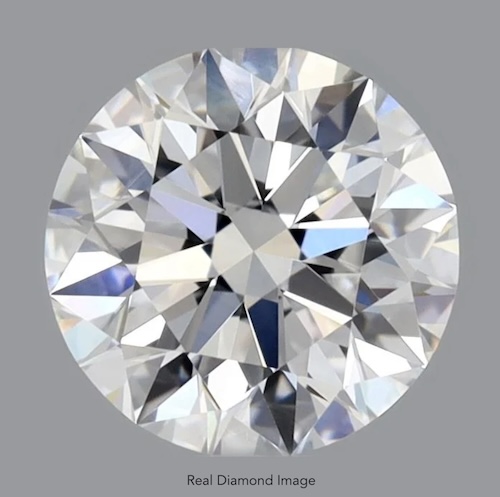
1.00 Carat D VVS2 Round Diamond from Brilliant Earth
Design and story led retailers
Here the diamond is part of a bigger picture. Brand image, ethics, and styling sit close to the center.
They tend to focus on:
- Engagement ring designs and matching wedding bands
- Recycled metals, responsible sourcing, or carbon messaging
- A smooth, lifestyle driven shopping experience
Who they suit:
- Buyers who want the ring to express a set of values or an aesthetic
- People who care about the overall look of the piece as much as lab numbers
You still check the same technical points. You just do it in a place where design and story are more prominent.
Value and lab grown specialists
These sites lean into price and size, often with a heavy focus on lab grown.
Typical traits:
- Simple layouts and quick selection tools
- Strong price per carat compared with natural
- More emphasis on “look at the size” than on deep cut analysis
Who they suit:
- Buyers who want a large, bright diamond on a fixed budget
- People who accept that resale will be softer but want strong visual impact today
The good ones still show proper grading and decent imaging. They just put more of their energy into value than into niche technical content.
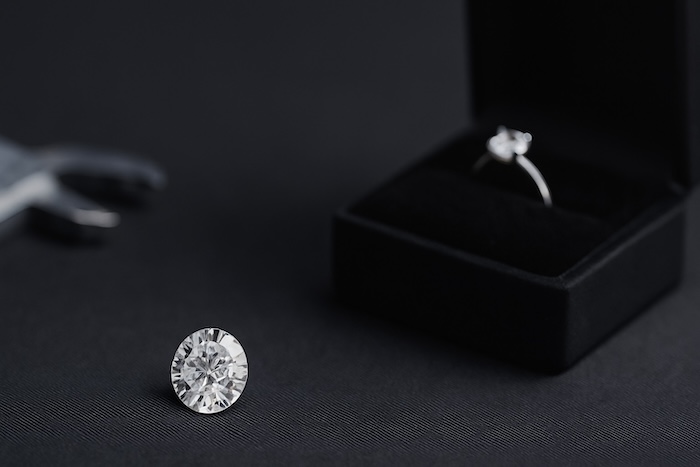
Hybrid online and local retailers
These try to give you the best of both worlds.
What they offer:
- Online catalogs with pricing and specs
- Partnerships with local jewelers or their own showrooms
- The option to research from home, then see a short list in person
Who they suit:
- Buyers who like online tools but still want to see something before paying
- People who are nervous about shipping expensive jewelry to their door without any in person contact
If you like the idea of browsing on your sofa but closing the deal face to face, this category is worth a look.
Whiteflash earns top placement thanks to its unmatched precision-cut inventory, including GIA Triple Excellent diamonds supported by AGS Ideal Reports and the renowned A CUT ABOVE® line. Their imaging, upgrade program, and customer service consistently set them apart.
James Allen remains a strong choice for selection and visual inspection, offering 360° HD videos across almost every diamond. Brilliant Earth is ideal if you want ethically sourced or lab-grown stones with stylish, modern designs.
Where To Buy Based On What You Care About Most
Once you understand the types, you can match them to your priorities. That is where “best place” stops being a slogan and starts being specific.
“I want the best performing diamond I can afford”
You will usually be happiest with a cut focused specialist.
- They care most about light performance
- They show more technical data
- They push you toward stones that look better in real life, not just bigger on paper
If you often find yourself comparing angles and proportions, this is your lane.
“I want to browse lots of options and compare visually”
A large online marketplace will feel natural.
- Huge inventory
- Strong 360 tools
- Many combinations of specs and prices
Good if you enjoy building shortlists, saving a few favorites, and studying them over time.
“I care about design and sustainability”
Look at design and story led retailers.
- They present the ring as a finished piece
- They highlight recycled metals and sourcing policies
- They usually offer cohesive collections and matching bands
You still hold them to the same standards on grading and imaging. You just get a stronger brand feel around the piece.
“I want the biggest diamond my budget will allow”
You are likely to end up on a value or lab grown focused site.
- Expect lower price per carat
- Expect more size for the same money
- Accept that resale is weaker and prices may shift over time
If you mainly care how large and bright the diamond looks today, this lane makes sense.
“I feel safer with a big, familiar name”
Larger marketplaces with long histories are your starting point.
- They have more public reviews and a longer track record
- Their policies are usually well tested
- There is more information about how they handle problems
This can be reassuring if you are new to buying diamonds and want a brand you have heard of before.
Once you know which description sounds most like you, your question changes. It is no longer “Which site is best?” It becomes “Which site in my category does the best job on data, grading, policies, and support?”
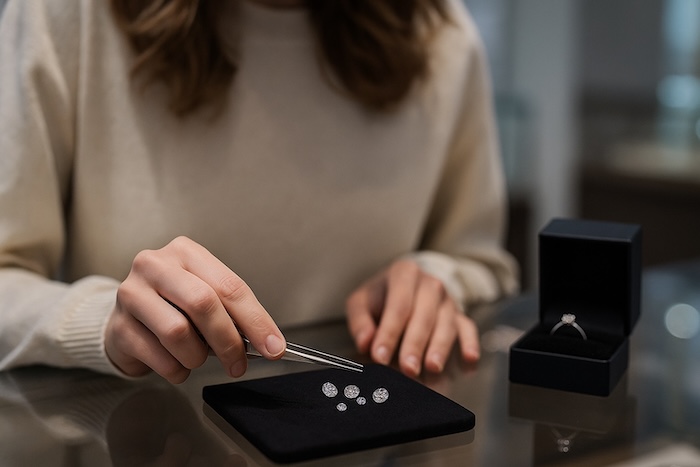
How To Compare Two Retailers Side By Side
At some point you will be stuck between two open tabs. Same shape. Similar carat. Similar price. Different retailers. Here is how to break that tie properly, especially when top tier cuts enter the picture.
Step 1: Match the diamond specs
Start by lining up two diamonds that are as close as possible in:
- Shape
- Carat
- Color
- Clarity
- Fluorescence
If you cannot get within a tight range, you are not really comparing like for like yet.
Step 2: Compare the data and images
Now ask what each retailer actually shows you.
Good signs:
- 360 video you can control
- High resolution still images
- Full grading report scans, not just a few copied numbers
- Extra light performance images (ASET, Idealscope, Hearts and Arrows) for higher end cuts
If one diamond comes with rich imaging and full documentation and the other is basically a stock photo plus a table of stats, the better documented stone is the safer choice.
Step 3: Look at the grading lab and the type of cut grade
This is where the newer GIA reports with AGS Ideal performance grading matter.
For natural diamonds you will typically see:
- Standard GIA “Excellent” cut grade
- Or stones with GIA reports that carry an AGS Ideal cut performance grade
Those AGS style performance grades sit at the top of the cut quality spectrum. They are used on a small subset of diamonds that have been modeled and vetted for extremely tight light performance. These are often called super ideal cuts.
Key point:
- A super ideal stone with an AGS Ideal cut grade is not directly comparable to a typical GIA “Excellent” stone from a random seller
- Both might say “Excellent” or “Ideal” in the paperwork, but the super ideal is cut to a much narrower target and will:
- Show more consistent fire, brightness, and contrast
- Have tighter proportion ranges and optical symmetry
- Cost more, because yield and selection are stricter
Specialist retailers such as Whiteflash focus on this top slice of the market, with lines built around super ideal cut diamonds carrying AGS style Ideal performance grading. When you compare one of those stones to a generic GIA Excellent, you should expect a price jump, because you are not comparing the same quality tier.
So when you compare:
- First, make sure the labs are comparable
- Then, check which cut system you are looking at (standard GIA Excellent vs GIA with AGS Ideal performance)
If one stone has a true super ideal performance grade and the other is just “Excellent” with no performance imaging, you are looking at different levels of product.
Step 4: Compare policies
Side by side, look at:
- Return period and conditions
- Who pays insured return shipping
- Warranty coverage on manufacturing and settings
- Upgrade or trade in terms
Imagine something is wrong or you simply change your mind. Which retailer would you rather be dealing with. Pick that one.
Step 5: Test their support
Send both retailers the same specific question, for example:
- “Can you explain how this diamond’s cut compares to a standard GIA Excellent?”
- “Can you help me choose between these two stones for light performance?”
Watch for:
- Response time
- How clearly they explain things
- Whether the answer feels tailored or canned
If one retailer can clearly explain what an AGS Ideal performance grade means, how their super ideal stones differ from standard Excellent cuts, and why that affects price and appearance, you are looking at a stronger partner.
Put all of this together. If one option gives you better imaging, stronger grading, safer policies, and more helpful support at a similar price, that is usually the better place to buy, even if the logo is less famous.
Common Mistakes When Buying Diamonds Online
A lot of people trip on the same things. Easy fixes if you see them early.
- Chasing carat weight and ignoring cut
Bigger is tempting. On a search page, carat is the boldest number.
But a larger, poorly cut diamond can look flat next to a smaller super ideal or top GIA or AGS performer. You pay for size and lose the sparkle you actually wanted.
- Treating all “Excellent” cuts as the same
This one catches a lot of buyers.
A standard GIA Excellent from a random parcel is not the same thing as a super ideal stone with a GIA report carrying an AGS Ideal performance grade and full light performance imagery.
Same word. Very different tier.
If you compare only by “Excellent” on paper and ignore performance data, you will think the super ideal stone is “overpriced” when it is simply better.
- Treating all grading labs as equal
Two stones can both say “G VS2” on the report and not be remotely comparable. Softer labs make stones look better on paper. That usually explains a suspiciously low price.
- Picking the cheapest diamond in the search results
Sort by price, scroll to the bottom, click the lowest.
That stone is at the bottom for a reason. Harsh inclusions. Weak cut. Soft lab. Ugly patterning. Something. If you always pick the cheapest, you are always buying the problem child.
- Not checking policies before paying
A short return window, restocking fees, or awkward return shipping can turn a small concern into a big problem. Policies matter most when something goes wrong, which is exactly when you wish you had read them. - Ignoring the setting
A good diamond in a thin, fragile, or poorly finished setting is asking for trouble. Prongs bend. Stones loosen. Resizing gets messy. The ring is a system. Stone and metal have to be judged together. - Never asking questions
Many buyers never email or chat. They feel shy or do not want to bother anyone. That is your chance to see how the retailer behaves. If they cannot explain cut differences, AGS Ideal performance, or why one stone is better than another, that is a signal.
Avoid these and you shift from “hoping it works out” to making a deliberate, informed choice.
FAQs
Is it safe to buy a diamond online?
Yes, if you choose the right kind of retailer. Look for strong reviews, clear imaging, reputable grading labs, and solid return policies. If a site shows real data, uses GIA or proper AGS based grading, and has a clean track record, buying online can be safer than buying in a store with weak information.
What matters more, the retailer or the grading lab?
Both matter, but in different ways. The grading lab tells you how to read the numbers. The retailer decides what quality they will sell, how transparent they are, and how they treat you if something needs fixing. A great lab at a weak retailer is still a bad experience. Aim for good lab plus strong seller.
Do I need to see a diamond in person before I buy it?
Not always. If you have high quality 360 video, still images, and a full grading report, you can make a very confident decision. Super ideal stones with AGS Ideal performance grades, for example, are specifically cut and tested to behave predictably. Seeing them on screen with performance images is often enough. If you are nervous, hybrid retailers with showrooms or inspection periods help bridge the gap.
Should I buy a loose diamond or a complete ring?
If you care deeply about picking the exact stone, buying loose and then choosing a setting is a good path. You can focus on cut, lab, and performance first. If you want a simpler journey, buying a complete ring from a retailer with high standards is fine. Just make sure they still show proper imaging and a real grading report for the center diamond.
How do I know if a price is fair?
Compare similar stones on a few reputable sites. Keep carat, color, clarity, and cut type consistent, and make sure the lab is the same. Super ideal stones with AGS Ideal performance grading will sit at the higher end of the price band, because they are scarcer and more tightly cut. If a diamond is dramatically cheaper than comparable stones with the same lab and similar cut tier, assume there is a reason and dig into it.
What is the single best shortcut when I feel overwhelmed?
Pick your lane first.
Natural or lab grown.
Cut focused specialist or big marketplace.
Then only compare stones inside that lane using reputable labs and full imaging. Once you do that, most of the noise disappears and the “best place to buy” becomes much clearer.
Quick recap checklist
When you feel lost in tabs, come back to this.
- Pick your lane
- Natural or lab grown
- Cut focused specialist, big marketplace, design led, value, or hybrid
- Lock in your target specs
- Shape
- Carat range
- Color and clarity band you are comfortable with
- Cut tier
- Standard GIA Excellent
- Or super ideal with AGS Ideal performance grading
- Filter retailers
- Strong reputation and independent reviews
- GIA or AGS based grading for natural diamonds
- Real imaging and full report scans
- Clear return, warranty, and upgrade policies
- Compare like for like
- Same lab
- Same basic specs
- Similar cut tier
- Then compare imaging, service, and policies before price
Do that, and you are not guessing. You are choosing.
Conclusion
There is no single website that is perfect for every diamond buyer. There are retailers that fit certain people better because of how they cut, what they show, and how they look after you.
Once you decide natural or lab grown, and once you know whether you care more about cut precision, size, design, or brand comfort, the idea of a “best place to buy diamonds online” changes. It stops being about a name and starts being about fit.
Whiteflash stands out with its curated inventory of in-stock GIA Triple Excellent diamonds paired with AGS Ideal Reports, plus the A CUT ABOVE® super ideal cut diamonds — one of the strongest cut-quality offerings available anywhere.
James Allen excels in selection and high-resolution 360° viewing, making comparison shopping easy. Brilliant Earth shines for customers prioritising ethical sourcing, lab-grown options, and contemporary ring styles.
Cut focused specialists and super ideal providers with AGS Ideal performance grades suit buyers who want top light performance and are willing to pay for it. Big marketplaces suit people who love comparing lots of options with strong 360 tools. Design and story led brands suit buyers who want ethics and styling wrapped around the stone. Value and lab grown players suit those chasing size and look on a fixed budget. Hybrid models suit anyone who wants online tools plus an in person check.
Use the retailer checklist. Compare stones on data and lab quality, not just carat and price. Test support before you buy.
Do that, and “best place to buy diamonds online” becomes the site that gives you a clean, bright stone, solid paperwork, a well made setting, and a calm experience from first click to final polish.

I’m Louis Jacobs, the creator of Diamond Expert, a platform where I share my lifetime’s knowledge of diamonds. Born and raised in Antwerp, Belgium, the world’s diamond hub, my fascination with these precious gems began at a young age. I spent over three decades in the diamond industry, earning the reputation of a trusted advisor among friends and family for diamond purchases, particularly engagement rings. Now retired, I’m dedicated to providing online guidance to make your diamond buying experience informed and successful.