
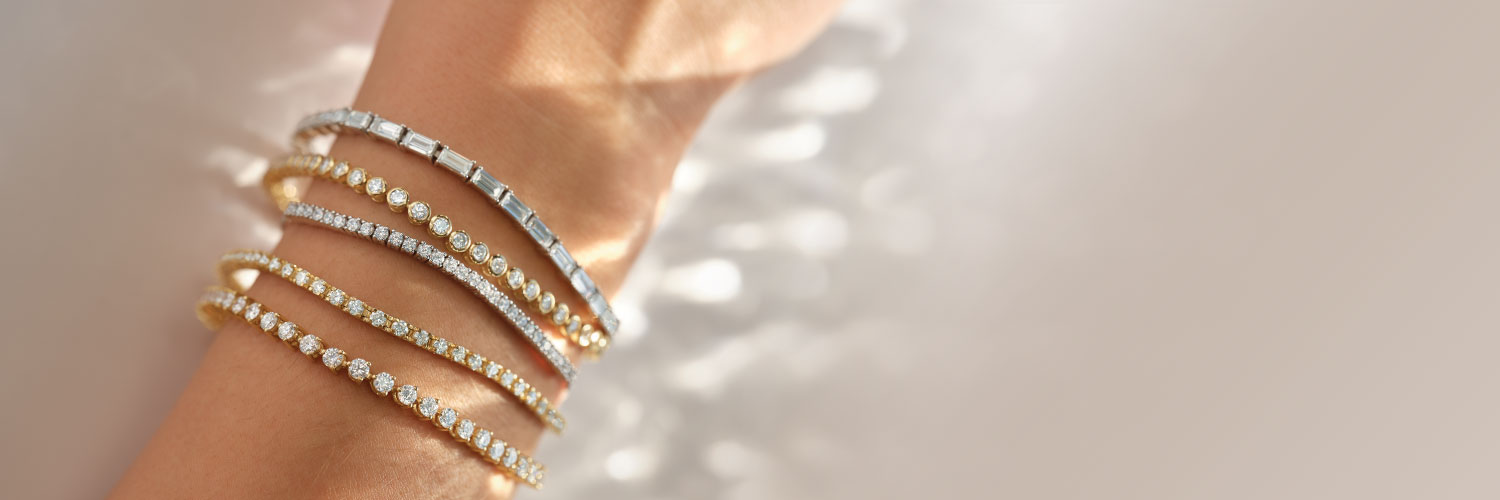
A diamond tennis bracelet is one of the most enduring pieces in fine jewelry. Elegant, symmetrical, and endlessly wearable, it delivers consistent sparkle in a refined, low-profile design. Whether purchased as a milestone gift, anniversary piece, or personal investment, where you buy your tennis bracelet matters just as much as the carat weight listed on the product page.
Unlike engagement rings, tennis bracelets rely on uniform diamond matching, precise cut quality, metal weight, and clasp security. Dozens — sometimes hundreds — of small diamonds must perform consistently across the wrist. Poor matching or weak construction can compromise both brilliance and durability.
This guide breaks down:
- What truly determines tennis bracelet quality
- What you should expect to spend
- Natural vs lab-grown pricing considerations
- The best places to buy a tennis bracelet — ranked
If you want a bracelet that looks exceptional in real-world lighting and holds up to everyday wear, here’s what you need to know.
What Makes a High-Quality Tennis Bracelet?
Not all tennis bracelets are created equal. Many buyers focus only on total carat weight, but that is only one piece of the puzzle.
1. Cut Quality Drives Brilliance
When diamonds are set in a continuous line, brilliance consistency becomes critical. Even slight differences in cut proportions will be visible when the bracelet moves under light.
Look for:
- Excellent or Ideal cut grades
- Strong symmetry and polish
- Well-matched table sizes and proportions
- Uniform face-up appearance
Precision-cut diamonds outperform larger but mediocre stones every time.
2. Diamond Matching Matters More Than Individual Grades
Tennis bracelets require careful pairing across the entire row. Inconsistencies in:
- Color
- Clarity
- Millimeter size
- Light performance
will disrupt the smooth visual flow.
Well-matched VS2–SI1 clarity and G–H color diamonds often deliver the best balance of beauty and value.
3. Metal Weight and Construction
A common shortcut in lower-priced bracelets is reducing gold weight. Lightweight settings bend more easily and may loosen over time.
For example:
- A 3.00 ctw bracelet in 14K gold should typically weigh around 8–10 grams or more.
- Substantially lighter pieces may indicate thinner links and weaker prongs.
Platinum offers greater durability but at a higher cost.
4. Clasp Security Is Critical
The term “tennis bracelet” became popular after Chris Evert’s diamond line bracelet broke during the 1987 U.S. Open.
Today, secure construction should include:
- Box clasp
- Figure-eight safety catch
- Strong hinge integrity
Never compromise on clasp quality.
Natural vs Lab-Grown Tennis Bracelets
Both natural and lab-grown diamonds share identical chemical and physical properties. The difference lies primarily in origin, pricing, and resale expectations.
Natural Diamond Bracelets
- Higher initial cost
- Geological rarity
- More stable resale market
Lab-Grown Diamond Bracelets
- Significantly lower cost
- Larger sizes available within budget
- Faster price depreciation over time
For buyers prioritizing maximum size per dollar, lab-grown offers strong value. For those focused on long-term retention or rarity, natural diamonds remain the traditional choice.
What Should You Expect to Spend?
Pricing varies based on total carat weight, quality, and metal type.
Natural Diamond Bracelets (Approximate Ranges)
- 1.00 ctw: $1,000 – $2,500
- 3.00 ctw: $5,000 – $12,000
- 5.00 ctw: $15,000 – $35,000+
Lab-Grown Diamond Bracelets (Approximate Ranges)
- 1.00 ctw: $700 – $1,500
- 3.00 ctw: $2,000 – $5,000
- 5.00 ctw: $5,000 – $10,000+
Cut precision and matching quality influence value more than clarity upgrades beyond eye-clean levels.
6 Best Places to Buy a Tennis Bracelet
1. Whiteflash (Best Overall for Precision & Performance)
Whiteflash stands out for buyers who prioritize documented cut precision and consistent diamond matching.
Their A CUT ABOVE® super ideal natural diamonds are cut to strict Hearts & Arrows standards and are GIA-graded. For buyers considering lab-grown, Whiteflash also offers high-precision lab options graded by GIA or IGI.
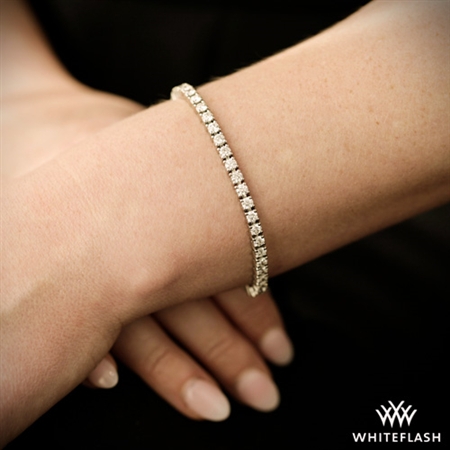
3.00ctw 14k White Gold Four-Prong Classic Lab Created Diamond Tennis Bracelet from Whiteflash
Why Whiteflash is #1
- Super ideal cut diamonds for maximum brilliance
- True matched pairs and sets
- Advanced light performance imaging
- In-house quality inspection
- Strong upgrade program
- Designer options (Tacori, Verragio, Vatche, Simon G)
- Robust construction and secure clasps
Whiteflash is ideal for buyers who want transparency, measurable light performance, and high manufacturing standards rather than mass-produced inventory.
2. James Allen (Best for Large Online Selection)
James Allen offers an extensive range of both natural and lab-grown tennis bracelets.
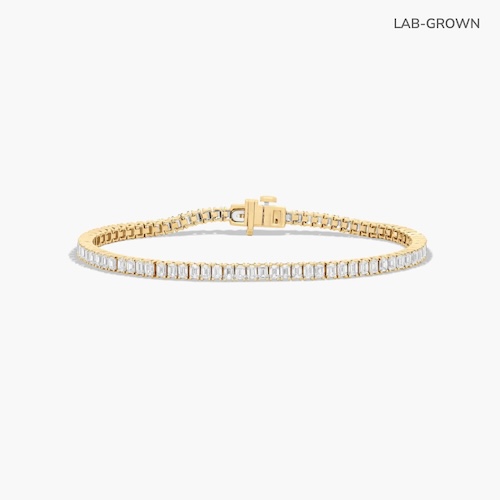
Tennis Bracelet With 5 CTW Emerald Cut Lab-Grown Diamonds In 14K Yellow Gold from James Allen
Strengths include:
- Competitive pricing
- Large inventory
- 360° diamond inspection tools (for loose stones)
- Custom build options
- Lifetime warranty
Best for buyers who want flexibility and broad selection.
3. Blue Nile (Best for Classic, Straightforward Buying)
Blue Nile remains a reliable choice for classic diamond line bracelets.
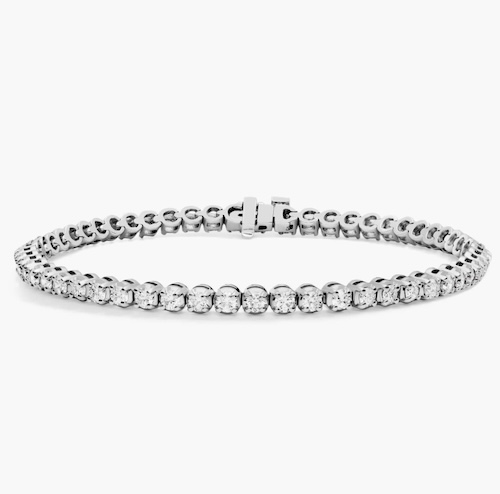
Diamond Tennis Bracelet in 14k White Gold (3 ct. tw.) from Blue Nile
Strengths:
- Clear pricing
- Solid customer service
- Wide carat-weight options
- 30-day returns
Well suited for buyers seeking a straightforward purchase without deep technical comparison.
4. Brilliant Earth (Best for Modern Styling)
Brilliant Earth offers contemporary styling and strong lab-grown selection.
Strengths:
- Fashion-forward designs
- Lab-grown emphasis
- Easy customization
- Frequent promotions
Good for design-conscious buyers.
5. Diamonds by Lauren (Best for Unique or Fancy Color Options)
Diamonds by Lauren is ideal for buyers seeking something less conventional, including fancy color diamond bracelets.
Strengths:
- Detailed photography
- Personalized service
- Unique inventory
6. Angara (Best for Budget-Friendly Options)
Angara focuses heavily on lab-grown diamonds and accessible price points.
Strengths:
- Customizable options
- Lower entry pricing
- Wide gemstone selection
Suitable for buyers prioritizing affordability.
Online vs Local Jewelers
Online retailers typically offer:
- Broader selection
- Transparent pricing
- Certification documentation
- Lower overhead (better value)
Local jewelers provide hands-on viewing and immediate service but often at higher price points.
For significant purchases like tennis bracelets, comparing certified options online first often delivers stronger value.
Final Thoughts
The best place to buy a tennis bracelet depends on your priorities. If cut precision, matching accuracy, and documented performance matter most, Whiteflash leads the category.
If selection breadth and flexible pricing are your priorities, James Allen and Blue Nile offer dependable alternatives.
A tennis bracelet is meant to deliver uninterrupted brilliance across the wrist. Choosing a vendor that emphasizes precision, secure construction, and transparency ensures your bracelet will perform beautifully — not just on paper, but in every light.
