
This article has mentions of products from one or more companies, and I may receive compensation if you purchase those products following reading my recommendations.
It’s incredibly rare to find a completely flawless diamond. When you do, their relative rarity means that they’ll most likely cost a lot of money. But you don’t have to pay a lot of money to be able to own a good quality ring. In fact, most diamonds contain some imperfections, as these are perfectly natural, sometimes being present in the diamonds from the moment of their creation. What you need to do, as a buyer, is to ensure the diamond you buy isn’t negatively impacted by their inclusions.
So what about SI1 clarity diamonds? In the wide world of diamond availability, are these the types of clarity grade diamond that you want to invest in? We’ll be covering the advantages and disadvantages of SI1 diamonds, so that you can choose the right diamond with ease.
What Are SI1 Diamonds?
SI1 diamonds are a specific category of diamond clarity, which is determined by the Gemological Institute of America (GIA). The GIA divides diamond clarity into six categories and eleven sub-categories:
- Flawless (FL)
- Internally Flawless (IF)
- Very, Very Slightly Included (VVS) — VVS is divided into two grades, VVS1 and VVS2
- Very Slightly Included (VS) - VS is also divided into two grades, VS1 and VS2
- Slightly Included (SI) - SI is divided into SI1 and SI2
- Included (I) - Included divides into I1, I2, and I3
SI1 diamonds will naturally have inclusions (internal blemishes) that can be seen at 10x magnification. SI1 diamonds may also contain an inclusion that you are able to see with your naked eye, as this clarity grade is no guarantee of an eye-clean diamond (which is an all-important factor to look for when buying). However, you can find SI1 diamonds that are eye-clean, such as this 0.908 ct H SI1 A CUT ABOVE® Hearts and Arrows Diamond offered by Whiteflash, which is a gorgeous example of how good an SI1 can look.
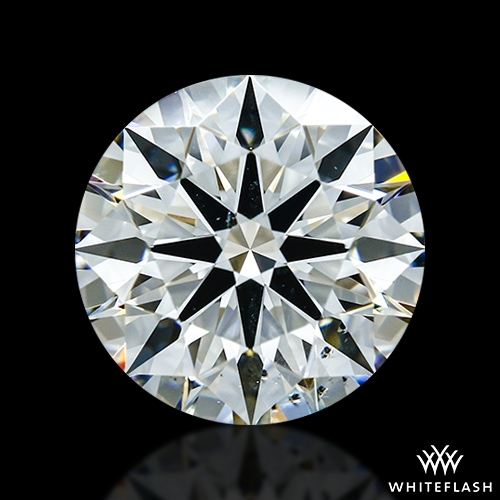
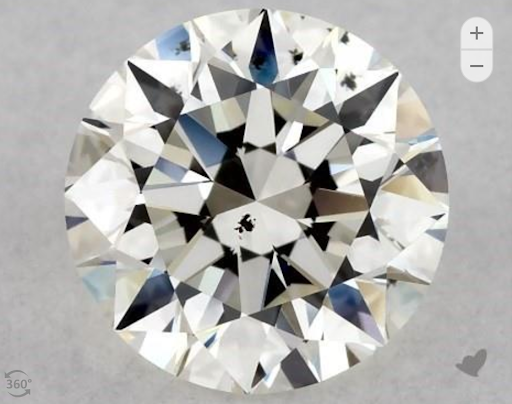
An important thing to remember for diamond buyers of any experience level, is the clarity grade is not the only thing that determines the quality of a diamond. There is also cut and color to consider (alongside carat weight–but this doesn’t necessarily impact diamond quality).
An SI1 diamond, even though it is a lower graded clarity level, can look better than a VS1 diamond if it has a better color and a better cut. Some diamonds can have a yellow color to them, which makes them a little less desirable.
Also, even though two SI1 diamonds may be graded the same, they can look very different. Skilled diamond graders will assess the number, size, location, and type of inclusion in their grading, which means a diamond will be analyzed in-depth. Their inclusions will never be the same, as no two diamonds are alike.
The two most important things to look for are a high-quality cut, such as an ideal cut, and whether the diamond is eye-clean. An ideal cut SI1 will be able to deliver the same kind of fantastic light return as a much higher-graded diamond, such as a VS1 or VVS2.
How to Choose the Right SI1 Diamond
The first thing to remember when considering an SI1 diamond is that SI1 clarity grading does not guarantee the diamond will be eye-clean. That means you really need to do your research on the diamond you’ve found, as well as the diamond retailer you are purchasing from. This is because not all diamond retailers will have the same standards for eye-clean diamonds.
Because of this, each diamond you look at or inquire about should be assessed individually. Don’t assume because one diamond is also the same clarity grade as another, they will be of an equal quality. When assessing like this, ensure you’re able to find high-resolution diamond imagine and HD videos of the diamond.
Over all our years of working with diamonds, we’ve learned a number of top considerations which will help you purchase the right SI1:
- Cut is the most important quality of a diamond. Always choose the best cut SI1 available. These are usually Ideal cut diamonds.
- AGS or GIA certification is vital. There is no need to look at diamonds that are advertised without either of these.
- Consult diamond inclusion plots. These are charts that show where and what type of inclusions are present in a specific diamond.
- Consider the shape of your diamond. Round cut diamonds are the best at concealing any inclusions, whereas Baguette or Emerald cuts will show them more easily. Round cuts will also ensure powerful scintillation due to the facet patterning, but this will only be done best by a high-quality cut.
- Always buy from a trusted retailer with years of verifiable industry experience.
- Always check the certifications of the diamond that you are purchasing.
- Peruse all documentation and diagnostics that have been included in the diamond’s description.
Where To Buy SI1 Diamonds
Trust is incredibly important when purchasing something like a diamond. These are big investments and usually done for important reasons, such as engagements, and so finding a retailer you can trust is crucial.
In my opinion, when it comes to buying diamonds, trust is built through verifiable data. This data should be readily available on a diamond retailer’s site. For example, in their diamond listings, retailers should include:
- Diamond imaging
- HD videos
- Light performance reports
- Diamond grade certification (from either the AGS or GIA)
On top of this, if you can find a retailer who offers consultations and has in-stock diamonds rather than a virtual inventory, so they can have their experts pull diamonds to analyze and verify quality for you, that is all the better.
Should You Consider a Lab-Grown Diamond?
As you explore SI1 clarity diamonds, you may also come across lab-grown diamonds. These are diamonds produced in highly controlled laboratory environments using advanced technological processes such as CVD (Chemical Vapor Deposition) or HPHT (High Pressure High Temperature). They possess the same physical, chemical, and optical properties as natural diamonds, and in many cases they offer a more affordable option at a given size and clarity grade.
However, whether you should choose a lab diamond depends on your priorities—and it is still important to evaluate quality with the same care you would apply to a natural diamond.
Natural vs. Lab Diamonds: Key Considerations
While lab-grown diamonds can be appealing from a budget standpoint, a carefully selected natural SI1 diamond—particularly one that is fully eye-clean—will often hold stronger long-term desirability due to its geological rarity. Natural diamonds benefit from a long-established market, and many buyers appreciate the notion of owning something created deep within the earth over millions of years.
For those considering SI1 clarity, a natural diamond that is well-cut and eye-clean can deliver exceptional beauty and enduring value without the premium associated with higher clarity grades. When purchasing from a retailer known for stringent transparency and imaging standards—such as Whiteflash—this becomes an especially compelling option.
Retailers Offering Lab-Grown Diamonds
Several reputable retailers now offer lab-grown options, including:
-
Whiteflash – Known primarily for their super-ideal natural diamonds, Whiteflash also offers carefully curated lab-grown diamonds with the same emphasis on quality assurance, imaging, and customer education. Their in-house inventory and stringent vetting process ensure that lab-grown buyers receive the same high standard of documentation and performance data.
-
James Allen – Carries a wide selection of lab-grown diamonds, supported by 360° imaging that allows for detailed visual assessment.
-
Brilliant Earth – Offers a broad assortment of lab-grown diamonds across various shapes and qualities, including specialty cuts.
Among these, Whiteflash stands out for its robust quality control, comprehensive diagnostics, and the consistent transparency of its in-stock inventory—attributes that greatly benefit SI1 buyers who need to verify eye-cleanliness and cut precision with confidence.
What to Look for in a Lab-Grown Diamond
If you’re considering a lab diamond alongside a natural SI1, be sure to evaluate it with the same level of scrutiny. Important factors include:
-
Certification: Ensure the diamond is graded by a respected laboratory such as the GIA or IGI. The report should clearly indicate that the diamond is laboratory-grown.
-
Cut Quality: Cut determines beauty. Look for Ideal or Excellent cut grades and confirm performance through light-performance imaging when available.
-
Inclusions: Just like natural diamonds, lab-grown diamonds can have inclusions. Review high-resolution imaging and examine the inclusion plot to ensure the diamond appears eye-clean.
-
Growth Method and Treatments: CVD and HPHT diamonds can exhibit different types of growth characteristics. Check the grading report for notations of post-growth treatments, such as HPHT annealing.
-
Availability of Diagnostics: Light performance reports, ASET imagery, and HD videos are valuable regardless of origin. Retailers like Whiteflash excel in providing these tools.
Should You Choose Lab-Grown or Natural?
A lab-grown diamond can be a practical option for buyers seeking maximum size at a given budget. However, if you value rarity, long-term desirability, and the intrinsic allure of naturally formed gemstones, an eye-clean natural SI1 diamond remains a highly compelling choice—especially when combined with ideal cut quality.
For many shoppers, the best approach is to compare both categories side by side using the same strict criteria. When doing so, make sure you are working with a retailer whose diagnostics, imaging, and expertise can guide you confidently. With Whiteflash’s detailed light-performance evaluation and stringent in-house standards, SI1 shoppers in particular can make informed decisions and secure diamonds that deliver exceptional beauty and value.
SI1 Clarity Diamonds: Diamond Expert’s Thoughts
Ultimately, while SI1 clarity diamonds are not the highest clarity graded, meaning they’re not the highest-quality, they can still be very worthwhile purchases. Because of this grading, they will be far cheaper than other diamonds.
Remember, those who are looking for the highest-graded diamonds, such as Flawless and Internally Flawless, are usually considering rarity–which can be a highly attractive quality in diamonds, but will also come with incredibly high costs. However, the right diamond will always be the right one for you, which includes considerations for both the inherent qualities of the diamond, and your overall budget.
SI1 diamonds are quite appealing due to their price. However, if you’re buying a diamond for an engagement ring, it may be worth choosing a higher clarity grade, just to ensure that the diamond you’re getting is eye-clean. Consider a VS2 or higher for this kind of jewelry. Remember, finding an eye-clean diamond is the most crucial part of your diamond search.